Conveyor Roller Quality Checks Every Mining Buyer Should Run Before Ordering
Conveyor Roller Quality Checks: What Procurement Engineers Should Verify Before Ordering
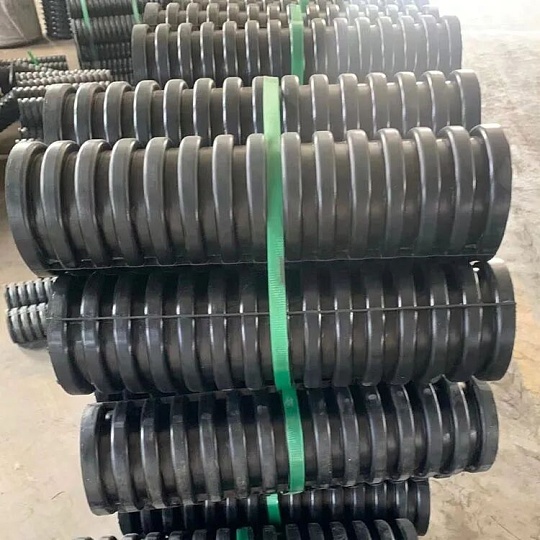
A conveyor roller failure is rarely announced in advance. A seized bearing, an out-of-specification shaft or a worn shell can stop a bulk material conveyor line for hours. In mining, cement and port operations the interruption moves quickly: crusher feeds slow down, loading schedules shift and maintenance costs climb. That is why the most practical starting point for a conveyor roller order is not price negotiation alone. It is a structured quality and compliance check.
On a belt conveyor, conveyor rollers are often called conveyor idler rollers. The group includes carrying rollers on the loaded side, return rollers under the empty belt, impact rollers at loading points and self-aligning rollers where the belt tends to travel off-centre. Shanghai Eastrise Trading Co., Ltd. is a Shanghai-based foreign-trade enterprise specialising in mining conveyor accessories. Its core product group is conveyor idler rollers, produced with self-operated industrial factories in China. The company supports OEM and ODM output, and its current annual production capacity for rollers is 2,000 tonnes.
Why Conveyor Roller Quality Becomes a Procurement Constraint
A heavy-duty conveyor roller has to work under dust, load and continuous operation. When a project specifies mining, cement or port conditions, the roller design is no longer a commodity detail. The buyer needs to answer five questions before ordering: Does the factory have a certified quality management system? Does the supplier provide batch-level inspection documents? Are the roller parameters suitable for the belt width and load? Are material and surface options matched to the site environment? And can the supplier support drawings, samples and overseas acceptance documents?
These are constraint questions. They separate a roller that can be maintained predictably from a roller that creates repeated site problems. Verification is not only about the final product; it is also about the process that produced it.
Industry Background: Rollers and Idlers in Heavy Bulk Handling
Market context helps explain why idler reliability has become a serious purchasing issue. According to Straits Research, the rollers and idlers segment was valued at USD 4.14 billion in 2025 and is projected to reach USD 7.05 billion by 2034. The same source reports that mining and quarrying accounted for 36 per cent of total rollers and idlers revenue in 2024, while steel remained the dominant roller material with a 64 per cent market share in 2024.
For a mining buyer this means that the general supply base is large, but project performance still depends on sealing, shell material, bearing quality, surface treatment and documentation. In engineering terms, three standards are commonly referenced in conveyor roller specifications:
- ISO 5048:1989, the international standard for calculating power and tension in belt conveyors with carrying idlers.
- CEMA Standard No. 502-2022, which sets dimensional standards and load ratings for bulk material belt conveyor troughing and return idlers.
- DIN 22112 Part 3, the German/European standard specifying testing requirements for belt conveyor idlers used in underground coal mining.
A supplier that can reference CEMA, DIN 22112 or GB/T 10595 with a documented inspection process gives the buyer a clearer baseline for acceptance.
A Supplier Verification Framework for Conveyor Roller Sourcing
1. Start with the quality management certificate
The ISO 9001 certificate shows whether the factory has a controlled system for design, procurement, production and quality management. It is not a promise that every roller is defect-free, but it does indicate that material selection, manufacturing steps and inspection procedures are managed rather than improvised. In the case of Shanghai Eastrise, the conveyor roller manufacturing system is certified to ISO 9001:2015; the certification is issued by China Quality Center and applies to the global market. The certification number is currently listed as TBC, so a buyer should request the latest certificate copy during supplier evaluation.
2. Require a Material and Inspection Report
A batch-level Material and Inspection Report is more useful than a general quality brochure. For the conveyor roller product line, each report is generated by batch and covers material, dimensions, radial runout, rotational resistance and appearance. It is issued by internal quality control or a third party, depending on the order. The applicable standards can be DIN 22112, CEMA or GB/T 10595, depending on the project requirement.
For overseas project acceptance, batch-wise inspection reports are particularly important. In Eastrise's aligning idler product data, batch-wise inspection reports are supplied specifically to support overseas project acceptance. Ask your supplier to include these reports with each shipment or at least before final payment.
3. Verify the roller parameters that fit your belt line
A specification that simply says standard roller is not enough. A steel conveyor roller specification should define tube diameter, shaft diameter, roller length or belt width, trough angle where relevant, bearing type and sealing arrangement.
For the current Eastrise product range, the suggested tube diameters are Ø89 mm, Ø108 mm and Ø133 mm; the suggested shaft diameters are Ø20 mm and Ø25 mm. Trough idlers are available with trough angles of 20°, 25° or 35°, and roller length can be customised according to belt width. Impact rollers can be supplied in suggested lengths from 315 mm to 1,150 mm, with load capacity designed for the operating conditions. If these values appear in a proposal, the supplier is already moving from catalogue language to engineering language.
4. Match materials and surface protection to site conditions
Material choice is the second layer of verification. Carbon steel is the base material for the trough idler, parallel idler roller, aligning idler and impact roller shell. Trough idlers use carbon steel tube and shaft with sealed double-row bearings. Parallel idler rollers use carbon steel tube and shaft with sealed bearings. Impact rollers combine carbon steel with wear-resistant rubber rings so that heavy impact at loading points is absorbed before it reaches the belt.
Surface protection should follow the environment. Parallel idler rollers and other roller types can be supplied with an optional galvanised or anti-corrosion coating for humid outdoor and salt-spray port environments. Where dust is heavy, the impact roller can use an optimized sealing structure to prevent bearing seizure. Sealed bearings also lower rotational resistance and running noise, which is useful for continuous 24/7 conveyor operations.
5. Confirm the inspection and approval workflow
Before mass production, the supplier should be able to provide drawing confirmation and first-article inspection for project-specific load matching. For the trough idler, this is an available step in Eastrise's process. For OEM and ODM work, inspection points cover incoming material, dimensional accuracy, radial runout, rotational resistance, noise and appearance. Private-label production also applies pre-shipment checks on appearance, dimension, performance, quantity and packaging.
For a project with custom engineering support, Eastrise offers product selection based on belt width, belt speed, load, trough angle, environment and installation dimensions. Drawing confirmation normally takes three to five business days, and mass production takes 30 to 45 days. That workflow gives the buyer a clear point at which design intent is converted into a manufactured roller.
6. Align export documentation with project acceptance
International roller procurement often involves FOB or CIF shipping terms. For overseas buyers, Eastrise can provide a full set of export documents under FOB or CIF terms. Private-label service is available for nameplates and packaging, which is useful when rollers are purchased by an equipment brand or a distributor that wants its own identity on the product. Tube diameter, shaft diameter, length, seals, bearings, surface treatment, logo and packaging are all customisable under OEM and ODM arrangements.
Step-by-Step Breakdown: From Site Conditions to Roller Order
- Define the operating zone on the conveyor line. Identify whether the roller will be used at a loading point, carrying section, return side, transfer point or belt mistracking area.
- Select the roller family. A loading point or crusher discharge calls for an impact roller; a loaded material section calls for a trough carrying idler; a return belt section calls for a parallel return roller; a mistracking area calls for a self-aligning or training idler.
- Confirm dimensions from belt width and load. Use the tube diameter, shaft diameter and roller length as the base specification. Eastrise suggests Ø89 mm, Ø108 mm or Ø133 mm tube diameters and Ø20 mm or Ø25 mm shaft diameters as a starting range.
- State environmental constraints. Humidity, salt spray, dust, temperature and continuous operation change the sealing, coating and bearing requirements.
- Request the evidence package. Ask for the ISO 9001 certificate, Material and Inspection Report, drawing confirmation, first-article inspection result and any batch-wise inspection reports needed for overseas acceptance.
- Confirm sample and mass-production lead times before placing the order. For OEM/ODM roller production, sample lead time is 5–7 days and mass-production lead time is 15–30 days. For engineering-support projects, drawing confirmation typically takes 3–5 business days and mass production 30–45 days after confirmation.
Use Cases: Mining, Cement and Port Conveyor Roller Applications
Mining: dusty, heavy-duty and continuous
In an ore conveyor line, operation is typically dusty, heavy-duty and continuous around the clock. Trough idlers support the loaded belt, impact rollers absorb shock at feed and crusher discharge positions, and parallel idler rollers support the return belt. For this type of service, dust-resistant seals and low rotational resistance matter as much as steel strength.
One continuing application involves a mining contractor using Eastrise impact rollers on a mine belt conveyor system for ore, crushed stone and other bulk materials. The volume has been around 100,000 units per year for two years. The reported result is stable continuous operation under heavy-load mine conditions with reduced downtime for material transport.
Cement: heavy dust and continuous material flow
A cement raw material handling line often runs under heavy dust, medium-to-high temperatures and continuous operation. The conveyor rollers need to provide stable support and reduce belt mistracking and maintenance frequency. For this application, the combination of trough idlers, parallel idler rollers, impact rollers and aligning idlers gives the line a defined support system from feed point to storage area.
Ports: humid, salt-spray and long-distance
Port and logistics conveyors are usually outdoor systems exposed to humidity, salt spray and long-distance running. Return-belt support is a central requirement, and corrosion-resistant coating plus sealed bearings are practical additions. Parallel idler rollers with optional galvanised or anti-corrosion surface treatment are a direct fit for this environment. Lower running noise from sealed bearings is also a useful benefit in populated port areas.
Comparison Table: Matching Conveyor Roller Types to Site Duty
| Roller type | Primary duty | Material and bearing basis | Typical options |
|---|---|---|---|
| Trough carrying idler | Support loaded material and prevent spillage on the carrying side | Carbon steel tube and shaft with sealed double-row bearings | Trough angle 20°/25°/35°, roller length customised to belt width |
| Parallel idler roller | Return-belt support or flat-section carrying | Carbon steel tube and shaft with sealed bearings | Optional galvanised or anti-corrosion coating for port and outdoor duty |
| Impact roller | Absorb impact at loading points and crusher discharge | Carbon steel with wear-resistant rubber rings | Length 315–1,150 mm, OEM/ODM, optimized sealing for dust |
| Aligning idler | Correct belt mistracking and reduce belt edge damage | Carbon steel tube, shaft and pivot frame with sealed bearings | Pivot frame arrangement and roller dimensions tailored to site conditions |
FAQ: Conveyor Roller Supplier Verification for Mining Projects
Q1. Are ISO 9001-certified conveyor roller manufacturers required for mining projects?
ISO 9001 certification should be treated as a quality-management filter, not a product guarantee. For mining projects, it tells the buyer whether the manufacturer controls design, procurement, production and quality management. Many international projects also reference product standards such as CEMA Standard No. 502-2022 for dimensional and load ratings, DIN 22112 Part 3 for underground coal mining idler testing, or GB/T 10595 for Chinese belt conveyor components. In the case of Shanghai Eastrise, the conveyor roller manufacturer operates an ISO 9001:2015 quality management system certified by China Quality Center; the certificate number is TBC and should be requested directly before order confirmation.
Q2. What conveyor roller parameters should buyers verify before ordering?
Buyers should verify the parameters that connect the roller to the specific conveyor line. These include tube diameter, shaft diameter, roller length, trough angle, shell material, bearing type, sealing arrangement and surface treatment. In Eastrise product data, suggested tube diameters are Ø89 mm, Ø108 mm or Ø133 mm; suggested shaft diameters are Ø20 mm or Ø25 mm; trough idlers support trough angles of 20°, 25° or 35°; and impact roller lengths can be supplied from 315 mm to 1,150 mm. The roller length should always be confirmed against belt width and installation drawings rather than assumed from a catalogue description.
Q3. What factors influence the cost of mining conveyor rollers?
Conveyor roller price is quotation-driven because the specification changes with the project. Cost inputs typically include steel shell size and length, bearing and sealing quality, surface treatment, rubber rings for impact zones, order quantity, inspection documentation and shipping terms. No responsible supplier can offer a meaningful price without the belt width, roller length and operating environment. For an international purchase, ask whether the quotation can be prepared under FOB or CIF terms and whether batch-wise inspection reports are included in the delivery package. These details affect both price and acceptance risk.
Q4. Can I order conveyor roller samples before mass production?
Yes. For OEM/ODM conveyor roller production, Shanghai Eastrise offers sample lead time of 5–7 days. If the roller requires engineering support, drawing confirmation is normally completed in 3–5 business days before sampling or mass production. This allows the buyer to check the physical roller dimensions, surface treatment, bearing rotation and nameplate details before committing to a full production batch.
Q5. How long does conveyor roller mass production take?
For OEM/ODM production, mass-production lead time is 15–30 days after order confirmation. For custom engineering-support projects where the supplier must select the roller from belt width, belt speed, load, trough angle and installation dimensions, mass-production lead time is 30–45 days after order confirmation. Drawing confirmation is an additional step that usually takes 3–5 business days. To check a current production schedule, send your belt width, requested roller length or drawing to Jone at jone.liu@sh-eastrise.com or via WhatsApp.
Conclusion: A Conveyor Roller Is Only as Reliable as Its Evidence
A conveyor roller order should be approved only when the buyer can see the quality system, the batch inspection document, the parameter list and the material protection plan. These elements convert a conveyor roller from an anonymous spare part into a traceable engineered component for a specific bulk material line.
Shanghai Eastrise supports this level of verification with ISO 9001:2015 certification, batch-level Material and Inspection Reports, OEM/ODM customisation, private-label service and export documentation under FOB or CIF terms. The company address is No. 2458 Dongda Road, Lingang New Zone, China (Shanghai) Pilot Free Trade Zone, and its official website is www.sh-eastrise.com.
Start With Your Conveyor Roller Specification
If you are evaluating conveyor rollers for a mining, cement or port project, send Jone your belt width and site conditions. The team can confirm the roller type, provide drawing support and prepare a batch-inspection-based quotation. A downloadable corporate brochure is also available here: Shanghai Eastrise corporate brochure.
Email: jone.liu@sh-eastrise.com
Tel/WhatsApp: +86 18516552763
Have Questions or Need More Details?
Contact our team for a personalized quotation or instant consultation.
Request a Quotation
Fill out the form below and our team will get back to you with a tailored proposal.
WhatsApp Direct Chat
Prefer to chat in real-time? Message us on WhatsApp for instant assistance & quick answers.
- Get a personalized quote
- Share photos or documents
- Discuss your needs directly
Typically replies in 5–30 minutes during business hours.