Conveyor Roller Supplier Evaluation: Impact Roller Capability and Delivery Assurance
An impact roller supplier should be evaluated on four evidence sets: standard-referenced dimensional and load data, a batch-linked material and inspection report, a written customization scope covering tube diameter, shaft diameter and roller length, and a delivery commitment that separates sample timing from mass-production timing. A price per piece answers none of those four questions, and at a loading point or crusher discharge the cost of a wrong batch is measured in belt damage and stopped production, not in the unit price difference.
This guide is written for procurement engineers, maintenance managers and distributors sourcing impact rollers for loading points, crusher discharge and heavy-duty conveyors. It converts a general supplier questionnaire into items that can be checked against documents, drawings and written commitments, and it flags the purchasing terms and acceptance criteria worth settling before an order is placed. Shanghai Eastrise Trading Co., Ltd. is a Shanghai-based foreign-trade enterprise supplying mining accessories that include conveyor idler rollers, with self-operated manufacturing factories covering in-house R&D, production, quality testing and export; its supplied capability data is used below wherever a concrete example of a check point is useful.
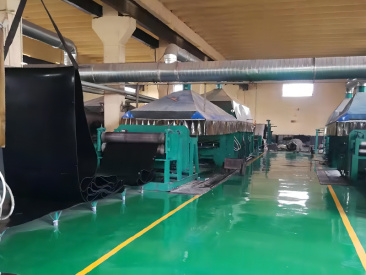
Supplier evaluation starts with production evidence: where the rollers are made, how batches are inspected and who signs the report.
Why impact rollers break the standard supplier comparison
An impact roller is a duty-specific component, not a carrying roller with a different surface. It sits where material lands — a transfer chute, a crusher discharge, a truck or ship loading point — and it absorbs repeated impact while still supporting and guiding the belt. That dual role means the evaluation criteria shift from "does the roller match the drawing" to "can this supplier evidence the same roller, batch after batch, and deliver it on a date the shutdown plan can use".
Three gaps cause most impact roller sourcing problems:
- Standard mismatch. The quotation cites a standard, but the standard covers a different idler class, a different test condition or a different market. The buyer then compares dimensional data and load ratings that were never produced on a common basis.
- Document gap. A sample passes, but the mass-production batch arrives without a material and inspection report tied to the lot, so the buyer has no basis for acceptance or rejection beyond visual check.
- Delivery assumption. Sample timing is quoted and mass-production timing is assumed. The two are separate commitments, and only one of them usually appears in writing.
A workable supplier evaluation closes all three before the purchase order is signed, and it does so with documents rather than assurances.
Industry background: where impact roller demand concentrates
Rollers and idlers are a mature, high-volume component category, and the demand mix explains why impact-duty supply is worth evaluating carefully. Straits Research reports that mining and quarrying represented 36% of rollers and idlers revenue in 2024, and that steel accounted for 64% of the material share in the same year. Heavy bulk handling therefore drives both the volume and the specification expectations of the category.
Headline market size figures should not be used as a supplier qualification tool. Published values diverge because the scopes differ: one commercial source values the "roller conveyor" market at USD 3.15 billion in 2025, while another values the narrower "rollers and idlers" segment at USD 4.14 billion in 2025. Those numbers describe differently defined markets, not different truths about a specific supplier's capability. For an evaluation decision, the relevant evidence is the supplier's own documents, standards references and delivery commitments.
Capability verification: DIN 22112, CEMA and GB/T 10595
Compliance claims are only meaningful when the buyer knows which standard, clause and test condition sits behind them. For impact rollers, a supplier should be able to state the reference documents applied to the quotation and produce a report that matches them. The three references most often named in conveyor roller sourcing are DIN 22112, CEMA and GB/T 10595, and each covers a different scope.
- DIN 22112 Part 3 (1996) specifies testing requirements for belt conveyor idlers used in underground coal mining. If the loading point is underground coal duty, this is the directly relevant test reference, and the supplier should be able to name the test items applied.
- CEMA Standard No. 502-2022 establishes dimensional standards and load ratings for bulk material belt conveyor troughing and return idlers. Because it is written for troughing and return idlers, a buyer sourcing impact rollers should ask which document or clause governs the impact roller's dimensions and load rating instead of assuming CEMA 502 covers it.
- GB/T 10595 is the Chinese belt conveyor standard referenced in the supplier's document set, applied subject to project requirements. The buyer's check is the clause list actually applied to the order and the inspection format used for the shipment.
- ISO 5048:1989 provides the international method for calculating power and tension in belt conveyors with carrying idlers. It matters when the roller set changes rotational resistance assumptions in the conveyor's power calculation.
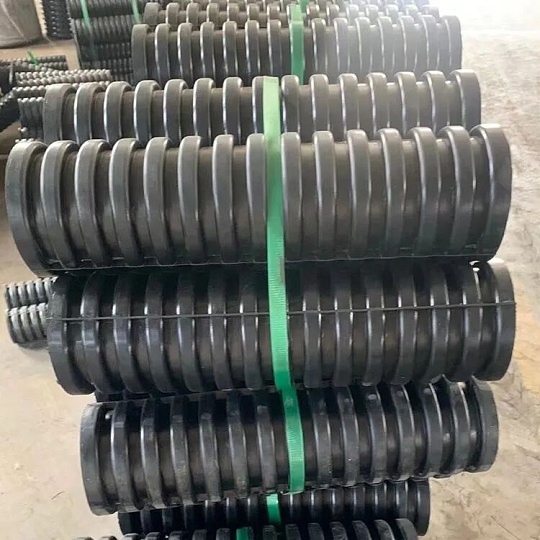
Impact rollers are specified by duty, not by appearance: the evaluation must connect the roller on the drawing to a stated standard and a stated test.
What each reference actually establishes
| Reference or document | What it establishes | What to request from the supplier |
|---|---|---|
| DIN 22112 Part 3 (1996) | Testing requirements for belt conveyor idlers used in underground coal mining | The test items applied to your idler, the corresponding report, and whether the test conditions match your duty |
| CEMA Standard No. 502-2022 | Dimensional standards and load ratings for bulk material belt conveyor troughing and return idlers | A written statement of which document or clause governs the impact roller's dimensions and load rating |
| GB/T 10595 | Chinese belt conveyor standard referenced in the supplier's document set, subject to project requirements | The clause list applied to the order and the inspection format used before shipment |
| ISO 5048:1989 | Method for calculating power and tension in belt conveyors with carrying idlers | Confirmation that the roller set's resistance assumptions match the conveyor's power calculation |
| Batch material and inspection report | Material, dimensions, radial runout, rotational resistance and appearance, generated by batch | A report tied to your batch or lot, issued before shipment |
| ISO 9001:2015 | Quality management system covering design, procurement, production and quality management | Certificate copy, issuing body, certification scope and current validity; the supplied record lists the certificate number as TBC and it should be verified directly |
The practical rule is simple: when a supplier names a standard, ask for the clause, the test and the report format in the same reply. A supplier that can produce all three is describing a system. A supplier that can produce only the standard's name is describing a marketing phrase.
Batch material and inspection reports: the document that closes the gap
The material and inspection report is the document that converts a sample approval into a mass-production acceptance decision. In the supplier's supplied documentation this report is defined as a batch quality document generated by batch, issued by internal QC or by a third party subject to order, and covering material, dimensions, radial runout, rotational resistance and appearance. Its standard reference is DIN 22112, CEMA or GB/T 10595, subject to project requirements.
For an impact roller order, the report should be read against the approved drawing, not in isolation. Four checks matter most:
- Batch traceability. The report identifies the lot actually shipped. A generic report with no batch identifier does not support acceptance.
- Dimensional confirmation. Tube diameter, shaft diameter and roller length are recorded as measured against the drawing, including the tolerances the drawing states.
- Runout and rotational resistance. Both are listed inspection items in the supplier's quality control scope, alongside noise and appearance checks during production and a pre-shipment inspection of dimensions, appearance, radial runout, rotational resistance, quantity and packaging.
- Issue and sign-off route. Internal QC or third-party inspection is stated, so the buyer knows which body signed and whether an independent check is optional at order stage.
The underlying quality system matters as context. The supplier's ISO 9001:2015 certification is described as covering design, procurement, production and quality management, issued through the China Quality Center. Because the certificate number in the supplied record is marked TBC, the buyer's check is to request the certificate copy and confirm the scope and validity before relying on it in a supplier approval file.
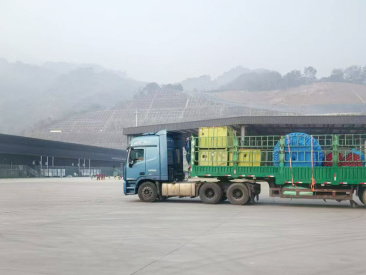
Batch-linked inspection records are the acceptance basis: they should identify the lot, the measured values and the sign-off body.
OEM/ODM and customization capability: what to verify, not what to assume
Customization capability is verifiable when the supplier publishes the parameter list it can change and the engineering inputs it needs to change them. In the supplied capability data, the OEM/ODM production route covers tube diameter, shaft diameter, length, seals, bearings, surface treatment, logo and packaging. Those are the parameters an impact roller buyer usually needs to align with an existing frame and belt line, and each one should appear on the drawing before a sample is made.
The same data set describes an engineering-support route in which product selection is based on belt width, belt speed, load, trough angle, environment and installation dimensions, with drawing confirmation quoted at 3–5 business days. A separate private-label route covers nameplates, colors, packaging, labels and manuals. For distributors and OEM buyers, that combination is what makes a supplier usable as a long-term source rather than a one-off vendor: the roller can be built to a specification, branded to a program, and documented for the end customer.
Three evaluation points follow:
- Parameter control. Ask for the controlled parameter list in writing. If tube diameter, shaft diameter and roller length are offered but seals, bearings and surface treatment are not, the customization scope is narrower than the impact duty requires.
- Engineering inputs. A supplier that asks for belt width, belt speed, load, trough angle, environment and installation dimensions before quoting is selecting rather than guessing. A supplier that quotes from a model number alone is guessing.
- Commercial envelope. MOQ and lead time are part of capability. The supplied OEM/ODM data states an MOQ of 10 units, negotiable for large orders, and the production mode is described as produced to order.
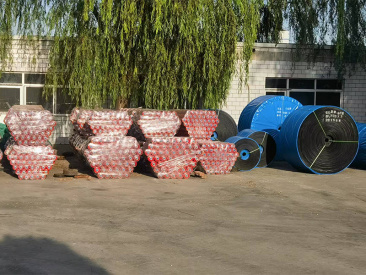
OEM and ODM orders should be tied to a confirmed drawing before sampling, with the parameter list fixed in writing.
Step-by-step supplier evaluation sequence
Run the evaluation in a fixed order, because each step produces the input the next step needs. The sequence below is built for impact rollers at loading points and crusher discharge, where a single mismatched batch interrupts production.
- Define the duty before contacting suppliers. Record the loading point or discharge location, belt width and speed, material type and lump size range, trough angle, environment (dust, moisture, underground or surface) and the installation dimensions of the existing frame. Without these, every quotation is an approximation.
- Request the drawing and the standards statement together. The reply should include the dimensional drawing, the standard or clause the roller is quoted against, and the test or inspection items that will be applied. Compare the standard's scope with your duty, especially when CEMA 502-2022 is cited for an impact application.
- Approve a sample against the drawing. Sample lead time is quoted at 5–7 days on the OEM/ODM route. Use the sample to confirm fit, finish, seal arrangement and the dimensional record, and approve it in writing so it becomes the acceptance reference.
- Fix the batch inspection requirements in the order. Specify material and inspection report coverage — material, dimensions, radial runout, rotational resistance and appearance — and require the report to identify the shipped lot.
- Confirm production evidence. Ask how the batch is controlled: incoming material inspection, dimensional and radial runout checks, rotational resistance and noise inspection, appearance inspection, and the pre-shipment inspection of quantity and packaging described in the supplier's quality scope.
- Verify the certification file. Obtain the ISO 9001:2015 certificate copy, confirm the issuing body and scope, and request the certificate number and validity directly, since the supplied record marks the number as TBC.
- Write the delivery schedule with two dates. Record the sample date and the mass-production date separately, and add the confirmation event each date depends on — usually drawing confirmation and order confirmation.
- Agree acceptance criteria and commercial terms in the contract. Inspection method, acceptance basis, payment terms, delivery terms and documentation should be settled before the order, not after the first shipment.
Red flags that justify slowing down: a quotation that names a standard but not the clause; a sample approved without a written dimensional record; an inspection report with no batch identifier; a delivery date given in a single figure with no confirmation event attached; and a supplier that cannot state whether it is the trading entity, the production entity, or both.
Where impact rollers are used, and what changes at each point
The same roller family meets very different conditions, so the evaluation emphasis moves with the application. Four common settings illustrate the shift.
- Loading points and transfer chutes. Impact absorption and frame fit dominate. The dimensional record and the sample fit check carry most of the risk, because the roller must sit correctly under a stream of falling material.
- Crusher discharge. Material is coarse and the impact is repeated, so wear resistance and seal integrity under dust matter alongside the dimensional match. Confirming the seal and bearing specification in the drawing is part of the evaluation, not an optional extra.
- Heavy-duty long conveyors. Rotational resistance and runout affect the conveyor's power and tension assumptions, which is where an ISO 5048:1989-based calculation check becomes relevant. A roller that meets dimensional requirements but changes resistance assumptions can affect the whole drive calculation.
- Underground coal, quarries and ports. Underground coal duty brings DIN 22112 Part 3 (1996) testing requirements into scope. Quarry and port duty adds dust, moisture and, at ports, salt-laden air, which shifts attention to seal arrangement, bearing protection and surface treatment as specified in the drawing.
Across all four, the evaluation question is the same: can the supplier show, in documents, that the roller delivered matches the roller specified for that duty?
Delivery assurance: treat sample timing and mass-production timing as separate commitments
The reliable way to assess delivery is to ask for two dates, not one. In the supplied capability data, OEM/ODM-configured roller orders carry samples at 5–7 days and mass production at 15–30 days. Those figures describe production timing against a confirmed order; they do not cover the confirmation steps that precede it, which is why the schedule should be written as a chain rather than a single number.
For the engineering-support route, the same data set quotes drawing confirmation at 3–5 business days, followed by mass production lead time. Read together, the two figures show why the buyer's question should be "when does the clock start" rather than "how many days". Lead time depends on specification, quantity, packaging and the date the order is confirmed, and the supplier's purchasing documentation states that port and lead time remain subject to order confirmation — a normal and reasonable condition that should be reflected in the buyer's own shutdown planning.
Delivery and commercial items to confirm in writing
| Item | Supplied data to confirm | Buyer's check |
|---|---|---|
| Sample lead time | 5–7 days on the OEM/ODM route | Confirm the start event — drawing approval or order confirmation |
| Mass-production lead time | 15–30 days on the OEM/ODM route | Confirm against quantity, packaging and the required delivery window |
| Drawing confirmation | 3–5 business days on the engineering-support route | Build this step into the schedule before production begins |
| MOQ | 10 units on the OEM/ODM route, negotiable for large orders; also described as subject to product specifications and packaging | Get the MOQ for your exact configuration in the quotation |
| Payment terms | T/T; 30% deposit and 70% before shipment on the quoted route; other methods subject to approval | Match terms to your internal approval and inspection sequence |
| Delivery terms | FOB / CIF / EXW; full container load and less-than-container load supported, export documents provided | Confirm the port, the document set and who handles each leg |
| Acceptance criteria | Optional third-party inspection; criteria must be stated in the contract; pre-shipment inspection of dimensions, appearance, radial runout, rotational resistance, quantity and packaging | Write the acceptance basis into the contract before ordering |
Purchasing terms and acceptance criteria to settle before the order
Purchasing terms and acceptance criteria are the items most often left to the invoice, and they are the hardest to fix afterwards. The supplier's purchasing documentation gives a usable starting list: MOQ subject to product specifications and packaging; delivery terms of FOB, CIF or EXW with full container load or less-than-container load supported and export documents provided; payment by T/T with other methods subject to approval; and acceptance criteria that must be stated in the contract, with optional third-party inspection.
Two of these deserve more attention than they usually receive in impact roller sourcing:
- The acceptance criterion itself. "Customer-approved sample or drawing confirmation" is only effective if the approved sample or the signed drawing exists as a dated document. Where the criterion is a dimensional inspection, the report must record measured values against that drawing, not a pass or fail note.
- The inspection point. Pre-shipment inspection of dimensions, appearance, radial runout, rotational resistance, quantity and packaging protects the buyer only if it happens before the goods leave and before the balance payment is released. Third-party inspection is available as an option, and it should be arranged at quotation stage if it is required, not requested after production ends.
What the evidence can and cannot prove
Document review proves conformity to a specification; it does not prove field life under your specific material and belt condition. A batch inspection report shows that the delivered lot matched the approved drawing on material, dimensions, radial runout, rotational resistance and appearance. It does not show how many months the roller will last under your lump size, your belt speed or your dust loading, and no supplier document should be read as a performance guarantee for an untested duty.
Reference experience helps bridge that gap but should be read as a company-provided reference rather than an independent result. The supplied case data describes a mining contractor using 100,000 units per year on a mine belt conveyor system handling ore, crushed stone and other bulk materials, over a two-year duration, with the reported outcome of stable continuous operation under heavy-load mine conditions, low failure rate and reduced downtime, noting wear resistance and adaptability to a dusty mine environment. For a buyer, the honest use of such a reference is to confirm that the supplier has served comparable conditions, then to validate the specific duty with a sample and a first production batch.
Frequently asked questions
Which standards should an impact roller supplier be able to document — DIN 22112, CEMA or GB/T 10595?
A supplier should be able to state which reference applies and produce the matching report. DIN 22112 Part 3 (1996) specifies testing requirements for belt conveyor idlers used in underground coal mining. CEMA Standard No. 502-2022 covers dimensional standards and load ratings for troughing and return idlers, so for impact rollers the buyer should ask which document or clause governs the impact design. GB/T 10595 is referenced in the supplier's document set, applied subject to project requirements. Where conveyor power and tension calculations matter, ISO 5048:1989 provides the calculation method for belt conveyors with carrying idlers. Request the clause, the test and the report format together.
What should a batch material and inspection report contain for impact rollers?
It should be generated by batch and cover material, dimensions, radial runout, rotational resistance and appearance, with DIN 22112, CEMA or GB/T 10595 cited as the standard subject to project requirements. It is issued by internal QC or by a third party subject to order. For acceptance purposes, the report must identify the shipped lot and record measured values against the approved drawing. The supplier's pre-shipment inspection covers dimensions, appearance, radial runout, rotational resistance, quantity and packaging, and inspection records are available. Optional third-party inspection can be arranged if independent verification is required.
How should a buyer evaluate an OEM belt conveyor roller manufacturer?
Check three things: the customization scope, the engineering inputs and the commercial envelope. The OEM/ODM scope covers tube diameter, shaft diameter, length, seals, bearings, surface treatment, logo and packaging. Engineering support is based on belt width, belt speed, load, trough angle, environment and installation dimensions, with drawing confirmation quoted at 3–5 business days. Commercially, the OEM/ODM route lists an MOQ of 10 units, negotiable for large orders, with samples at 5–7 days and mass production at 15–30 days. Private-label services cover nameplates, colors, packaging, labels and manuals. Confirm each item in the quotation rather than inferring it from a catalogue.
What sample and production lead times apply to impact roller orders?
In the supplied capability data, OEM/ODM-configured roller orders carry samples at 5–7 days and mass production at 15–30 days. On the engineering-support route, drawing confirmation is quoted at 3–5 business days before mass production lead time applies. Both figures run from a confirmation event, so the buyer should ask whether the clock starts at drawing approval or at order confirmation. Lead time also depends on specification, quantity and packaging, and the purchasing documentation states that port and lead time remain subject to order confirmation. Plan the shutdown window around the confirmation date, not around the day the inquiry was sent.
What purchasing terms and acceptance criteria should be confirmed before placing an order?
Confirm MOQ, which is subject to product specifications and packaging as well as to the production route; delivery terms of FOB, CIF or EXW, with full container load or less-than-container load supported and export documents provided; payment by T/T, with a 30% deposit and 70% before shipment quoted on one route and other methods subject to approval; and acceptance criteria, which must be stated in the contract, with the option of third-party inspection. Where a customer-approved sample or drawing confirmation is the acceptance basis, make sure that document exists and is dated before production starts.
Conclusion: evaluate the system, not the price list
Impact roller sourcing fails at the seams between documents: a standard named without a clause, a sample approved without a record, a delivery date quoted without a start event, and commercial terms settled after the goods are made. The evaluation sequence in this guide closes those seams by treating standards, batch reports, customization scope and delivery commitments as one connected set of evidence rather than four separate conversations.
For buyers working through an impact roller requirement for a loading point, crusher discharge or heavy-duty conveyor, the practical next step is to request four items in a single message: the dimensional drawing with the standards clause, a sample quotation with its lead time, the batch material and inspection report format, and the written commercial terms including acceptance criteria. A supplier that answers all four in one reply has demonstrated the process, not just the product.
Next step: the full company and product range, including conveyor idler rollers, is available at Shanghai Eastrise Trading Co., Ltd. The product brochure can be downloaded here: Eastrise product brochure (PDF). Sample requests and drawing confirmations are handled through the same channel, so the four-item request above can be submitted together.
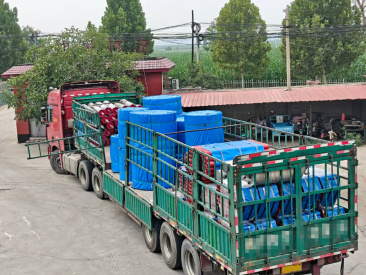
Sample requests and drawing confirmations are the two events that start the timeline — both should be documented before mass production is scheduled.
Have Questions or Need More Details?
Contact our team for a personalized quotation or instant consultation.
Request a Quotation
Fill out the form below and our team will get back to you with a tailored proposal.
WhatsApp Direct Chat
Prefer to chat in real-time? Message us on WhatsApp for instant assistance & quick answers.
- Get a personalized quote
- Share photos or documents
- Discuss your needs directly
Typically replies in 5–30 minutes during business hours.