
How to Audit a Conveyor Roller Supplier: From Drawing Confirmation to Mass Production
A qualified conveyor roller supplier turns every project into a controlled, documented process. Auditing how that process actually runs — drawing confirmation, first-article inspection, full-batch dimension and radial run-out checks — tells a buyer more about real manufacturing capability than any product brochure.
This memo sets out that audit framework and works through a single project case: a trough idler ordered under the reference ER-TROUGH-108. It also explains why sample lead time and mass-production lead time are useful reliability signals when a buyer is deciding whether a spare-parts programme can safely be released.
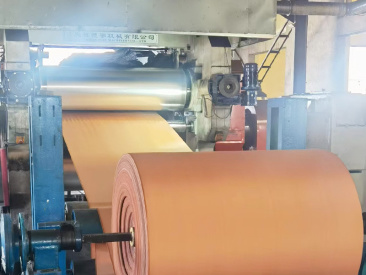
Figure 1 — A conveyor roller production facility is the physical evidence base behind any supplier audit.
What a Conveyor Roller Actually Does
A conveyor roller supports the conveyor belt through bearing rotation and converts rotational power into linear motion of the belt, which is how material transportation is achieved on belt conveying equipment. Within a single belt line, roller roles are not interchangeable. Carrying rollers support the loaded belt on the carrying side. Return rollers support the empty belt on the return side. Impact rollers sit beneath the loading point and absorb falling-material energy. Guide rollers and self-aligning rollers keep the belt tracking on centre.
This functional definition matters for auditing. If the geometry of a belt conveyor roller runs outside what the belt can tolerate, the belt vibrates. Vibration accelerates seal wear, shortens bearing life and damages belt covers. Every inspection step described below exists to break that chain at its source.
Problem Definition: Why Supplier Audits Fail Before Production Starts
Most roller problems are invisible at the quotation stage. They surface months later: the belt vibrates at the roller stations, bearings seize unevenly, breakage rates climb, and the line goes down between planned maintenance windows.
Audit evidence points to one recurring cause. The supplier received the project's load and dimensional requirements but never converted them into controlled manufacturing steps. The drawing was "understood" rather than confirmed. The sample was approved, but approval never became a batch inspection standard. By the time material arrives, the buyer holds a product with no traceable inspection record behind it.
Where downtime costs are high — common on dusty, continuous-operation conveyor lines — that gap becomes an operational cost rather than a procurement inconvenience.
Industry Background: Why This Audit Matters Now
The global roller conveyor market was valued at USD 3.15 billion in 2025 (Dataintelo). At the narrower component level, the rollers and idlers segment reached USD 4.14 billion in 2025 and is projected to reach USD 7.05 billion by 2034 (Straits Research, 2026). Steel remains the dominant material, holding 64% of global market share in 2024, and Mining & Quarrying is the largest single end-use vertical at 36% of total revenue in 2024 (Straits Research).
That scale explains why supplier auditing matters more than catalogue comparison. In a fragmented market, the real differences between suppliers sit in dimensional tolerance, seal design, run-out control and inspection discipline — not in appearance.
Three published standards anchor those expectations:
- ISO 5048:1989 — the international standard for calculating power and tension in belt conveyors with carrying idlers.
- CEMA 502-2022 — dimensional standards and load ratings for bulk material belt conveyor troughing and return idlers.
- DIN 22112 Part 3 (1996) — testing requirements for belt conveyor idlers used in underground coal mining.
A supplier that cannot map these references onto its own inspection plan is not yet ready to pass an audit.
Detailed Solution: The Audit Framework
A conveyor roller audit is not a check on one attribute. It is verification of a complete evidence chain: project data → controlled drawing → first article → full-batch inspection records. A single undocumented link is enough reason to hold an order.
Step-by-Step Breakdown
Step 1 — Confirm the Drawing Before Anything Is Cut
The audit starts with paper, not metal.
For a trough idler such as ER-TROUGH-108, the confirmed drawing package should lock down:
- tube diameter and wall thickness
- shaft diameter, shaft length and shaft end form
- bearing seat position and bearing type
- seal design
- overall roller length
- material grade for body and shaft
- surface treatment or coating
- the radial run-out limit matched to the project's load
The pass condition is simple: the supplier returns a numbered drawing that reflects the buyer's load and operating-condition data, and any change runs through revision control rather than conversation. A supplier that ships without ever receiving the matching load data has already failed this gate.
Step 2 — Treat the First Article as the Reference Standard
Before mass production, a controlled sample is required. The first article's job is to act as the reference standard. It is dimensionally checked, radial run-out is measured, bearing seats are verified, the seal is inspected, and rotational resistance is tested by hand. Once approved, it becomes the comparator for every subsequent batch.
On an ER-TROUGH-108 project, a 5–7 day sample cycle is reasonable — short enough to show the supplier has live production capacity, long enough to show the sample was actually manufactured rather than pulled from a shelf. A supplier that can send a "sample" the same day without any inspection is a supplier that can ship without any inspection.
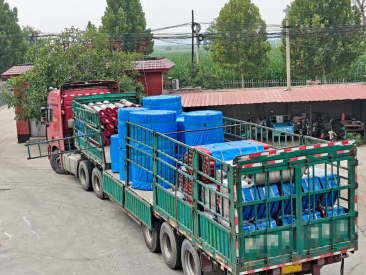
Figure 2 — First-article inspection converts project data into a measurable reference standard.
Step 3 — Replace Design Intent with Measured Data
This is where most audits stay weak. Design intent says a roller should "run true" or "turn smoothly." Neither statement can be measured. The audit's job is to convert intent into numbers that appear on an inspection plan: outer diameter and its tolerance, radial run-out limit, axial float, shaft end length, bearing press depth and rotational resistance.
Radial run-out deserves special attention. In bulk material handling, run-out deviation transfers to the belt as vibration. Vibration shortens bearing life, loosens seals and adds energy loss the drive has to compensate for. The measured gap is concrete: against competitor rollers with labyrinth seals, a well-engineered roller specification provides 22% lower run-out tolerance and 13 dB lower running noise. That is the order of difference a buyer can verify with their own measurement.
Step 4 — Demand Full-Batch Inspection, Not Sample Inspection Only
Full-batch inspection means each production batch is checked against the inspection plan, and the records are available to whoever receives the rollers. The inspection plan should cover, at minimum:
- dimensional check on every batch
- radial run-out check on every batch
- verification that the specified bearing brand and grade were used
- seal integrity check
- marking and traceability
Traceable records are the only way a buyer can confirm inspection actually happened. Without them, an audit has no evidence base — only assurances.
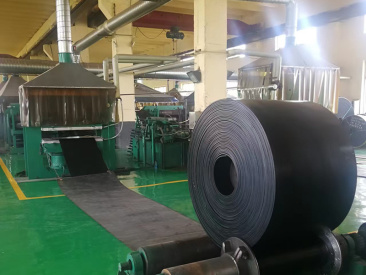
Figure 3 — Batch inspection keeps dimensional and run-out data traceable after delivery.
Step 5 — Read Lead Times as a Reliability Signal
Lead time is diagnostic rather than administrative. A structured project typically shows 5–7 days for samples and 15–30 days for mass production. That band is credible because it includes material preparation, production scheduling and final inspection.
The warning signs run the other way: a mass-production lead time far below the band with no extra line or expediting cost behind it; a lead time that shifts with every new order; or a supplier unwilling to place inspection time into the schedule at order confirmation.
Step 6 — Keep the Evidence Trail Alive After Delivery
The final step is the one buyers skip most often. Full drawing confirmation, traceable inspection records and fast spare-parts support reduce maintenance downtime. An audit should confirm that drawings and revision history are archived, first-article reports are retained, batch inspection records can be retrieved on request, and consumable parts can be delivered quickly. Verified at audit stage, these shorten downtime. Assumed at audit stage, they do not.
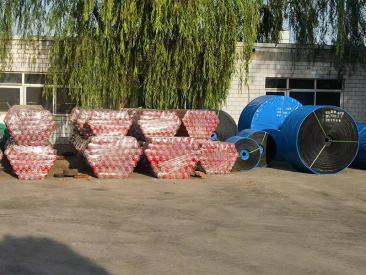
Figure 4 — Documented records are what allow an industrial conveyor roller programme to be audited after delivery.
Use Cases: Where the Audit Pays Back
Mining conveyor roller projects
Dust load, impact loading and 24/7 runtime are the defining constraints. A heavy-duty conveyor roller built for these conditions requires dust-resistant seals, low rotational resistance and wear resistance, with parameters matched to the operating condition. The same audit logic applies to underground conveyor roller specifications, where access for replacement is limited and the cost of a seizure is highest.
Cement plant raw material handling
Heavy dust, medium-to-high temperatures and continuous operation. The standard requirement is dust and corrosion resistance, plus stable support that reduces belt mistracking and maintenance frequency.
Port and bulk terminal conveying
Outdoor service, humidity, salt spray and long conveying distances. Return roller specifications here typically call for corrosion-resistant coating and sealed bearings, and low-noise operation becomes a measurable site requirement rather than a comfort feature. A corrosion resistant conveyor roller is not a premium option in a salt-spray environment; it is the baseline.
Crusher discharge and loading points
Falling-material impact is the dominant risk at the load zone, which is exactly what an impact roller — a rubber-ring impact roller in most heavy-duty configurations — is designed to absorb. Material choice follows from that. Compared with HDPE polymer rollers, steel rollers offer 35% higher load capacity and 40% stronger impact resistance, making them suitable for mining, cement and heavy-duty bulk material handling. Steel holds 64% of global roller material share for that reason.
Across all four settings the audit process is identical. Only the numbers on the inspection plan change. A quarry conveyor roller line and a coal conveyor roller line can sit in the same audit template with different run-out and sealing limits.
Comparison Table: What a Robust Specification Looks Like
The table below compares audit-relevant characteristics of a well-engineered roller specification against three common alternatives.
| Audit Dimension | vs. competitor rollers with labyrinth seals | vs. HDPE polymer rollers | vs. low-cost conventional steel rollers |
|---|---|---|---|
| Core difference | Better-engineered seal design, top-tier bearing brands, tighter run-out control and complete batch inspection reports | Steel rollers provide better load-bearing capacity and impact resistance in heavy-duty applications | Enhanced sealing performance, precise run-out control and fully traceable quality inspection |
| Measured gap | 22% lower run-out tolerance; 13 dB lower running noise | 35% higher load capacity; 40% stronger impact resistance | 25% lower run-out deviation; 3× longer service life |
| Best-fit conditions | Humid, dusty, salt-spray or 24/7 continuous-operation environments | Mining, cement and heavy-duty bulk material handling | Dusty, continuous-operation conveyor lines with high downtime costs |
| Maintenance behaviour | Full drawing confirmation, traceable inspection records and fast spare-parts support reduce maintenance downtime | Steel-body design supports standardized maintenance, with optional corrosion-resistant treatment to reduce failure frequency | Designed to reduce seizure, abnormal noise and unplanned replacement |
| Cost position | On equal material and component specs, lower total cost of ownership | Under identical specifications and quantities, longer service life for lower comprehensive cost | Higher initial purchase price, yet lower total lifecycle cost thanks to fewer failures and replacements |
FAQ
What compliance documents should I request first when auditing a conveyor roller supplier?
Ask first for the drawing package and the inspection plan, then for material evidence. Three published references give the audit something to measure against: ISO 5048:1989 for power and tension calculation in belt conveyors with carrying idlers, CEMA 502-2022 for dimensional standards and load ratings on bulk material troughing and return idlers, and DIN 22112 Part 3 (1996) for idler testing requirements in underground coal mining. If the supplier cannot map each reference onto a specific batch inspection action, the audit is not complete.
How can a supplier prove manufacturing capability for a project such as ER-TROUGH-108?
Through three documented steps. First, a numbered and controlled drawing that reflects the buyer's load and operating-condition data. Second, a first-article sample with recorded dimensional and radial run-out measurements. Third, every production batch inspected against that same plan, with traceable records retained. Suppliers who produce the full chain are measurably different from suppliers who produce a certificate only.
Is a higher unit price for an audited roller justified?
The higher price reflects enhanced sealing performance, precise run-out control and traceable inspection. The return shows up over the lifecycle: against low-cost conventional steel rollers, an audited specification provides 25% lower run-out deviation and 3× longer service life. Because there are fewer failures and replacements, total lifecycle cost is lower despite the higher initial purchase price — and where downtime is expensive, the gap closes fast.
How long should sampling and mass production take?
A structured project typically shows a 5–7 day sample cycle and a 15–30 day mass-production cycle. The short sample window indicates live production capacity; the longer production window contains material preparation, scheduling and final inspection. Buyers should budget the first-article cycle and the mass-production cycle separately rather than expecting them to run in parallel.
Which conveyor roller manufacturer is better for mining belt conveyors?
The better manufacturer is the one that can produce an audit trail — controlled drawings, first-article reports, per-batch dimensional and radial run-out inspection, traceable records and fast spare-parts support. That matters most in mining, where Mining & Quarrying represents 36% of rollers and idlers revenue and lines run dusty, continuous and heavy-duty. Shanghai Eastrise Trading Co., Ltd. manufactures on self-operated factory capacity — an 11,000 m² facility, 50 employees, 2,000 t annual output, a 10-engineer R&D team and OEM/ODM support — so project requirements such as ER-TROUGH-108 can be checked against the audit steps described above. To request a quotation or arrange a sample, contact jone.liu@sh-eastrise.com.
Ready to Audit a Supplier Against Your Own Project Data?
Send your conveyor line specification, or request the ER-TROUGH-108 drawing package, and we will return a quotation with a sample and mass-production schedule.
Email: jone.liu@sh-eastrise.com | Tel / WhatsApp: +86 18516552763
Download the Eastrise product catalogue (PDF)
Shanghai Eastrise Trading Co., Ltd. | www.sh-eastrise.com
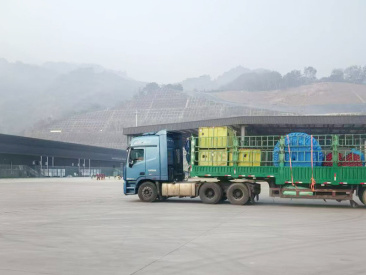
Figure 5 — Sample and mass-production capacity at the Eastrise facility.
Conclusion
The purpose of a supplier audit is to settle a problem before it reaches the conveyor line. A reliable conveyor roller supplier produces consistent evidence: a controlled drawing that reflects your load data, a first article that becomes the reference standard, dimensional and radial run-out inspection on every batch, and inspection records that remain retrievable after delivery.
Lead time adds the final signal. A 5–7 day sample window and a 15–30 day mass-production window indicate a supplier working to a process rather than improvising. For projects such as ER-TROUGH-108, and for mining, cement and port operations running continuously, those checks are not paperwork. They are the practical difference between a belt that runs true and a belt that vibrates until something fails.
Have Questions or Need More Details?
Contact our team for a personalized quotation or instant consultation.
Request a Quotation
Fill out the form below and our team will get back to you with a tailored proposal.
WhatsApp Direct Chat
Prefer to chat in real-time? Message us on WhatsApp for instant assistance & quick answers.
- Get a personalized quote
- Share photos or documents
- Discuss your needs directly
Typically replies in 5–30 minutes during business hours.