
Parallel Idler Roller Technical Guide: Tube, Shaft & Bearing
Parallel Idler Roller Technical Guide: Tube, Shaft & Bearing
A parallel idler roller supports the conveyor belt on the return strand or on a flat-carrying section, where the belt runs on a straight line of rollers instead of in a trough. Its function is narrow; its duty is not. The roller has to carry the belt with the lowest practical rotational resistance, hold the belt line steady, and keep turning while dust, moisture and grit are present.
For buyers and maintenance engineers, the practical question is rarely “which parallel roller” but “which three numbers”. Tube outer diameter, shaft diameter, and bearing and seal configuration decide most of what a plant experiences downstream: belt vibration, seal life, rotational resistance, noise level, and how often the position has to be re-rolled. Everything else — coating, marking, packaging — follows from those three choices.
This guide works through those parameters using the parallel idler roller options supplied by Shanghai Eastrise Trading Co., Ltd., a Shanghai-based foreign-trade enterprise that supplies conveyor idler rollers and other mining accessories to global markets. The available build is tube diameters Ø89, Ø108 and Ø133 mm, shaft diameters Ø20 and Ø25 mm, sealed bearing configuration, and carbon steel tube and shaft. Each parameter below is explained in terms of what changes on the conveyor, not only what appears in a catalogue table.
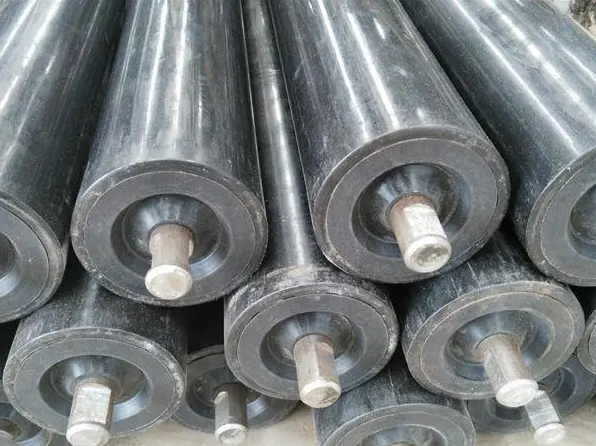
Parallel idler rollers: straight-line belt support for return and flat-carrying positions. Image: Shanghai Eastrise Trading Co., Ltd.
Why Parallel Roller Problems Are Usually Specification Problems
A parallel roller that runs hot, rumbles, wears through its shell or seizes in service is often reported as a quality failure. In bulk material handling it is more often a specification failure: the roller was dimensioned for a different duty than the one it now performs. Because a long conveyor carries a large number of rollers, a small per-unit error is multiplied across the whole line.
Four symptoms account for most of these cases, and each points back to a different parameter:
- Rumble or belt vibration. Traces to radial runout — tube straightness, wall consistency and the fit between shaft, bearing and shell. Runout is a dimensional result, not a cosmetic one.
- High rotational resistance and heat. Traces to seal design, bearing clearance, grease fill and the pressure a tight seal applies to the shaft.
- Shell wear and drifting belt line. Traces to tube diameter and length relative to the load carried, and to the surface treatment specified for the environment.
- Short seal life in dust or salt spray. Traces directly to bearing and seal configuration, and to whether the coating was chosen for the site rather than for the catalogue.
Where the Parallel Roller Sits in Bulk Material Handling
Parallel rollers appear wherever the belt does not need troughing: the return run, flat-carrying sections, transfer areas, and short conveyors where a straight belt line is the design intent. The environments that dominate demand for these positions are well defined — dusty, heavy-duty continuous handling in mining; high-dust, medium-to-high temperature continuous operation in cement plants; and outdoor, humid, salt-spray, long-distance conveying in bulk ports and logistics terminals.
The material picture is stable. Steel remains the dominant material for conveyor rollers, accounting for 64% of global market share in 2024, according to Straits Research — consistent with carbon steel tube and shaft being the standard build for parallel positions, with coating and sealing carrying the environmental adaptation.
Demand concentration matches that material logic. Mining and quarrying is the leading end-use industry for rollers and idlers, representing 36% of total revenue in 2024, again per Straits Research. The same source values the rollers and idlers segment at USD 4.14 billion in 2025, projected to reach 7.05 billion by 2034. Market-size figures for this category vary widely depending on whether “roller”, “idler” and “roller conveyor” are counted as components or sub-systems, so any single figure should be read as an order of magnitude rather than a planning number.
The standards landscape is more decisive for buyers than the market size. ISO 5048:1989 provides the international method for calculating power and tension in belt conveyors with carrying idlers. CEMA Standard No. 502-2022 sets dimensional standards and load ratings for bulk material belt conveyor troughing and return idlers. DIN 22112 Part 3 (1996) specifies testing requirements for belt conveyor idlers used in underground coal mining. These three documents address different scopes — calculation, dimension and rating, and testing — so a roller that is dimensionally interchangeable can still fail a test requirement. That is why the applicable standard belongs in the purchase contract rather than in a verbal understanding.
The Three Parameters That Decide Performance
1. Tube outer diameter: Ø89, Ø108 and Ø133 mm
Tube outer diameter sets the geometry of the roller–belt interface, the mass that must be accelerated, and the rotational speed the bearing and seal have to tolerate at a given belt speed. A smaller tube turns faster for the same belt speed, which raises the duty on bearing and seal and increases the number of rollers per metre of line. A larger tube turns more slowly and is stiffer, but adds mass and changes the height of the belt line.
The available tube diameters are Ø89 mm, Ø108 mm and Ø133 mm, with length and wall thickness fixed per drawing. Ø108 mm is the reference size used in this guide, and the model designation follows the confirmed drawing rather than a catalogue default: a typical reference format is TBC (ER-PARALLEL-108), where the suffix reflects the tube size locked at drawing confirmation.
Diameter alone is not a performance rating. Two rollers with the same Ø108 mm tube can differ in wall thickness, straightness and bearing fit, and therefore differ in radial runout once the belt is running. Wall thickness and tolerances must be confirmed on the drawing, not assumed from the outer diameter.
2. Shaft diameter: Ø20 and Ø25 mm
Shaft diameter governs three things: bending stiffness between the mounting points, the bearing bore that can be fitted, and the shaft end detail that mates with the conveyor frame. It is also the parameter most often inherited from an old drawing without being re-checked against the current duty.
Both Ø20 mm and Ø25 mm shafts are available in carbon steel. In practice the larger shaft is specified where the span between supports is long or the belt load is heavy, and the smaller shaft where the installation geometry is compact — but the decision is confirmed against actual installation dimensions during drawing review, not selected from a table.
Tube and shaft diameter are not independent choices. The bearing bore, shaft shoulder and seal housing must align on the same drawing, which is why a model designation is issued after confirmation and why a “same size” replacement can still fail to fit.
3. Bearing and seal configuration
Sealed bearing configuration is the standard specification for parallel rollers in dusty and wet duty. The seal does two jobs at once: it keeps grit out of the raceway and it retains grease. Both jobs compete with rotational resistance, because a tighter seal protects the bearing at the cost of torque. That trade-off, not the bearing brand, is what most seal specifications are really about.
Environment decides where the balance should sit:
- Mining and quarrying. Dust is continuous and heavy, so exclusion is the priority. Dust-resistant seals and low rotational resistance are the stated requirements for these positions, with parameters confirmed against actual operating conditions.
- Ports and logistics. Outdoor humidity and salt spray dominate. A sealed bearing is combined with a corrosion-resistant coating, and low noise becomes a stated requirement; the protection level is confirmed per project (TBC).
- Cement. Heavy dust plus medium-to-high temperature. Dust and corrosion resistance apply together, and the operating temperature range is confirmed per project (TBC).
Noise is worth treating as a specification item rather than a nuisance. It is influenced by bearing quality, seal fit and radial runout, which is exactly why noise appears in the inspection list alongside dimensions and rotational resistance.
4. Material and surface treatment
Carbon steel tube and shaft is the baseline build. Surface treatment, coating colour, nameplate, logo and packaging are specified per project as part of OEM/ODM customization, together with tube diameter, shaft diameter, length, seals and bearings. For private label supply, nameplates, colours, packaging, labels and manuals can all be customized.
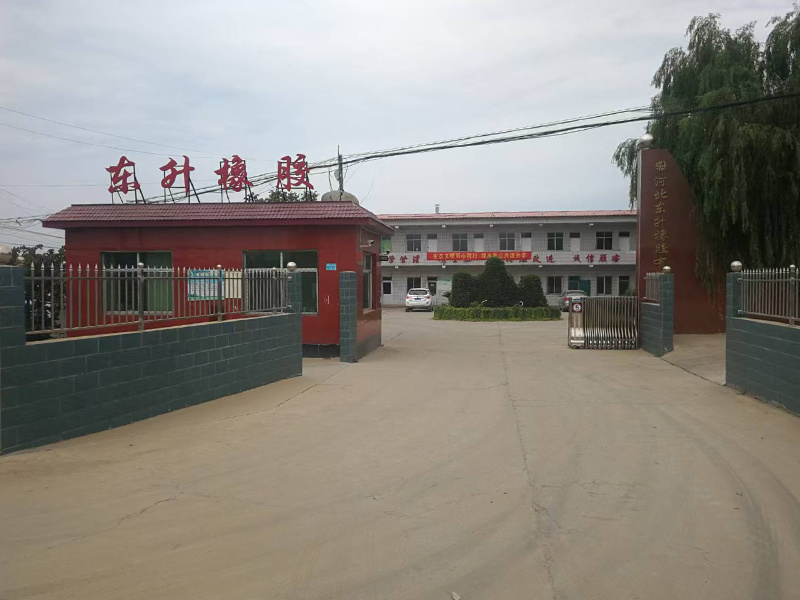
Roller production and inspection area. Image: Shanghai Eastrise Trading Co., Ltd.
Specifying a Parallel Idler Roller in Seven Steps
The sequence below reflects how a roller moves from enquiry to approved batch. Skipping a step tends to reappear later as a dimensional or performance dispute.
- Fix the duty envelope. Collect belt width, belt speed, load, trough angle, environment and installation dimensions. Engineering support selection is based on exactly these inputs, so an enquiry without them will be answered with questions rather than a drawing.
- Select tube diameter and length. Choose from Ø89, Ø108 or Ø133 mm and confirm wall thickness, length and straightness tolerance on the drawing.
- Select shaft diameter and end detail. Choose Ø20 or Ø25 mm carbon steel shaft and define the shaft end interface with the conveyor frame.
- Choose bearing and seal configuration. Match seal tightness and bearing clearance to dust, moisture, temperature and noise requirements for the site.
- Choose material finish and marking. Specify surface treatment, nameplate, colour, logo and packaging — the items covered by OEM/ODM and private label customization.
- Confirm the drawing and lock the designation. Drawing confirmation takes 3–5 business days. The model designation, for example TBC (ER-PARALLEL-108), is issued against the confirmed drawing.
- Approve the sample and set the inspection plan. Samples are typically produced in 5–7 days, followed by sample approval and first-article inspection before batch production begins.
Inspection is where a specification becomes enforceable. The checks below are the ones actually recorded on roller batches, and they should be written into the acceptance criteria of the contract rather than agreed verbally.
| Stage | What is checked | Why it matters for a parallel roller |
|---|---|---|
| Incoming material | Tube and shaft material verification | Confirms the carbon steel build before any machining |
| Dimensional | Tube OD, length, shaft OD | Controls fit with frame, brackets and neighbouring rollers |
| Radial runout | Measured runout of the assembled roller | Primary driver of belt vibration and noise |
| Rotational resistance | Measured turning resistance | Indicates seal tightness, bearing fit and grease fill |
| Noise | Running noise check | Critical for port and logistics terminals |
| Appearance | Coating, finish, marking | Confirms corrosion protection and brand marking |
| Pre-shipment | Dimensions, appearance, runout, rotational resistance, quantity and packaging | Final gate before dispatch; a Material and Inspection Report can be issued per batch |
Use Cases: Where Each Configuration Earns Its Place
Mining and quarrying
Return and flat-carrying positions in mine conveyors run continuously in dust, with ore, crushed stone and other bulk materials on the belt. The specification priority is seal exclusion plus wear resistance, with parameters set by the actual operating conditions rather than by a generic mining label. Roller supply at this scale is a volume business as much as an engineering one: in a two-year mining programme, a mining contractor ordered 100,000 conveyor roller units per year for a mine belt conveyor system and reported stable continuous operation under heavy-load mine conditions, a low failure rate and reduced downtime for material transport.
Cement plants
Raw material handling lines combine heavy dust with medium-to-high temperatures. Here the parallel roller's job is stable support with reduced belt mistracking and lower maintenance frequency, working alongside the belt cleaner and the conveyor frame. Because temperature affects seal and grease behaviour, the operating temperature range has to be confirmed per project rather than assumed.
Ports and bulk terminals
Outdoor, humid, salt-spray conditions over long conveying distances make corrosion resistance the deciding factor. A sealed bearing plus corrosion-resistant coating addresses both ingress paths — spray from outside and dust from the belt side — while low noise matters because terminals operate near populated areas and enclosed structures.
General bulk material handling and flat carrying
On flat-carrying and short transfer sections, the priority shifts to dimensional consistency and low rotational resistance. A parallel roller that turns freely and holds its line reduces the load on the drive and keeps the belt tracking predictably.
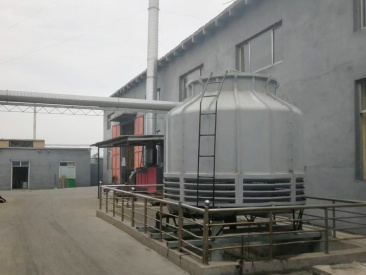
Batch handling during production. Image: Shanghai Eastrise Trading Co., Ltd.
Parallel Idler Roller Configuration Comparison
The table below isolates the parameters that can be confirmed at quotation stage from the ones that must be locked at drawing stage. Only confirmed options are listed; anything marked TBC is confirmed per project.
| Parameter | Options in scope | What it controls on the conveyor | When it is locked |
|---|---|---|---|
| Tube outer diameter | Ø89 mm / Ø108 mm / Ø133 mm | Belt contact geometry, rotational speed at a given belt speed, roller mass | Drawing review |
| Tube length and wall | Per drawing | Fit within the frame, straightness and radial runout behaviour | Drawing review |
| Shaft diameter | Ø20 mm / Ø25 mm | Bending stiffness between supports, bearing bore match, shaft end fit | Drawing review |
| Tube and shaft material | Carbon steel | Baseline strength and wear behaviour | Quotation |
| Bearing configuration | Sealed bearing configuration | Dust and moisture exclusion, rotational resistance, noise | Quotation, confirmed at drawing |
| Seal and protection level | Per project (protection level TBC) | Service life in dust, humidity and salt spray | Project confirmation |
| Surface treatment and marking | Per project; nameplate, colour, logo, packaging | Corrosion protection and brand presentation | Quotation to drawing |
| Model designation | Issued per drawing, e.g. TBC (ER-PARALLEL-108) | Traceability between drawing, nameplate and reorder | Drawing confirmation |
| Standards reference | DIN 22112 / CEMA / GB/T 10595, subject to project requirements | Dimensional and testing basis for acceptance | Contract |
Two useful cross-references: ISO 5048:1989 remains the reference for power and tension calculation in belt conveyors with carrying idlers, and CEMA 502-2022 covers dimensional standards and load ratings for troughing and return idlers. DIN 22112 Part 3 (1996) applies where underground coal mining testing requirements are called for.
Frequently Asked Questions
Which standards and documents can parallel idler rollers be supplied against?
Rollers are inspected against DIN 22112, CEMA or GB/T 10595 depending on the project requirement stated in the order. A Material and Inspection Report can be issued per batch, covering material, dimensions, radial runout, rotational resistance and appearance; the report is generated by batch through internal QC or a third party, subject to the order. Shanghai Eastrise Trading Co., Ltd. operates under an ISO 9001:2015 quality management system certified by China Quality Center, covering design, procurement, production and quality management. Because ISO 5048:1989 (calculation), CEMA 502-2022 (dimensions and load ratings) and DIN 22112-3:1996 (testing for underground coal mining) address different scopes, the applicable standard should be named in the purchase contract.
Can parallel idler rollers be built to our own drawing and brand — and can you supply as an OEM belt conveyor roller manufacturer?
Yes. OEM and ODM production is available, with customization covering tube diameter, shaft diameter, length, seals, bearings, surface treatment, logo and packaging. Private Label production is also offered, with customization of nameplates, colours, packaging, labels and manuals. Where the drawing does not yet exist, engineering support selection is carried out against belt width, belt speed, load, trough angle, environment and installation dimensions, and the model designation is issued once the drawing is confirmed. Production is made to order, and the company exports to global markets with a current export share of 20%.
What are the minimum order quantities and payment terms?
For OEM/ODM orders the MOQ is 10 units. Engineering support projects start at 50 pcs, negotiable for large-scale projects, and private label orders at 100 pcs, negotiable for large orders. Payment terms are 30% deposit and 70% before shipment; T/T applies, with other methods subject to approval. FOB, CIF and EXW delivery terms are available, with port and lead time confirmed at order confirmation. Acceptance criteria should be stated in the contract, and third-party inspection is optional.
How long does a sample take, and what exactly gets approved?
Samples are typically produced in 5–7 days. Approval is based on a customer-approved sample or drawing confirmation, with inspection records available. For engineering support projects, drawing confirmation takes 3–5 business days and is followed by sample approval and first-article inspection before batch production. Approving both the dimensional drawing and the physical sample is what prevents a later disagreement about runout, seal fit or marking.
What is the production lead time after approval?
Mass production lead time is 15–30 days for OEM/ODM orders, and 30–45 days upon order confirmation for private label production. Monthly capacity for private label is 10,000 pcs, against an annual production capacity of 2,000 t, and rollers are produced to order rather than from stock. If you want to test a parallel roller configuration on your own line before committing to a batch, request a sample or a quotation with your belt width and installation dimensions.
Next Step: Sample, Drawing Review or Quotation
Send the belt width, belt speed, load, environment and installation dimensions for the return or flat-carrying position, and the team will confirm the tube diameter, shaft diameter and bearing and seal configuration against a drawing. A full product and capability overview is available in the Eastrise product brochure (PDF).
Shanghai Eastrise Trading Co., Ltd.
Website: www.sh-eastrise.com
Email: jone.liu@sh-eastrise.com
Tel / WhatsApp: +86 18516552763
Address: No. 2458 Dongda Road, Lingang New Zone, China (Shanghai) Pilot Free Trade Zone
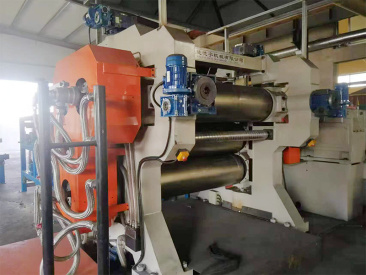
Inspection and dispatch preparation for conveyor roller orders. Image: Shanghai Eastrise Trading Co., Ltd.
Conclusion
Parallel idler roller performance is decided before the purchase order, in three numbers and one configuration. Tube diameter (Ø89, Ø108 or Ø133 mm) sets contact geometry, mass and rotational speed. Shaft diameter (Ø20 or Ø25 mm) sets stiffness and the bearing bore it can carry. Sealed bearing configuration sets how long the roller survives dust, humidity and salt spray before rotational resistance climbs. Carbon steel tube and shaft provide the baseline, with coating and marking adapted per project.
The practical discipline is to fix the environment first, confirm the diameter chain against installation dimensions, lock the drawing and model designation — for example TBC (ER-PARALLEL-108) — and then write the inspection items into the contract. A roller specified that way is replaceable on reorder, which is the outcome most maintenance teams actually want from a parallel position.
Have Questions or Need More Details?
Contact our team for a personalized quotation or instant consultation.
Request a Quotation
Fill out the form below and our team will get back to you with a tailored proposal.
WhatsApp Direct Chat
Prefer to chat in real-time? Message us on WhatsApp for instant assistance & quick answers.
- Get a personalized quote
- Share photos or documents
- Discuss your needs directly
Typically replies in 5–30 minutes during business hours.