
Conveyor Roller Supplier Evaluation: Verifying Capability and Delivery Assurance
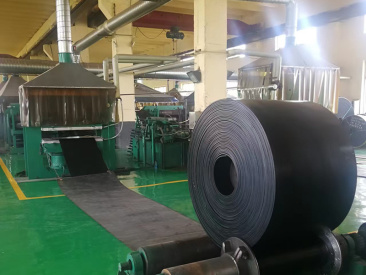
Comparing conveyor roller quotations is straightforward: tube diameter, shaft diameter, trough angle, quantity. Comparing the suppliers behind those quotations is not. Two offers can be dimensionally identical and still differ on whether either supplier can produce a batch material report, hold coaxiality across a full production run, and deliver inside the window a project schedule already assumes. This article sets out a buyer-facing evaluation framework built on the document trail that a conveyor roller supplier should be able to produce.
The Evaluation Problem: Price Is Visible, Capability and Delivery Are Not
A conveyor roller appears simple. It is a tube, a shaft, a bearing set and a seal, rotating under a belt. Because the visible geometry is simple, buyers tend to evaluate it on geometry alone — and geometry is the part of the offer that every supplier can match on paper.
The failure mode is predictable. A buyer collects four quotations, picks the lowest one that meets the drawing, and releases a purchase order. What has actually been verified at that point is that someone can type numbers into a quotation template. Two questions remain unanswered:
- Capability: can this supplier physically manufacture the roller to the drawing, at the tolerance the conveyor needs, across the whole ordered quantity?
- Delivery assurance: is the promised date a plan, or an estimate generated to win the order?
Neither question can be answered by looking at a price. Both can be answered by looking at documents. That is the practical shift this framework recommends: treat supplier evaluation as a documentation exercise rather than a specification comparison exercise.
Industry Background: A Fragmented Supply Base with Codified Standards
The rollers and idlers segment was valued at USD 4.14 billion in 2025 and is projected to reach USD 7.05 billion by 2034, according to Straits Research. A separate commercial estimate places the broader roller conveyor category at USD 3.15 billion in 2025 (Dataintelo). The gap between the two figures is a scope difference rather than a contradiction — component versus sub-system — and it is a useful reminder for buyers that published market numbers only mean something once the boundary is defined.
Two structural facts shape how buyers should evaluate roller suppliers:
- Mining and quarrying is the leading end-use industry for rollers and idlers, representing 36% of total revenue in 2024, per Straits Research. The dominant application is also the harshest: dust, continuous operation and heavy impact loads.
- Steel remains the dominant roller material, accounting for 64% of global market share in 2024. Carbon steel tube and shaft assemblies with sealed bearings remain the mainstream construction for troughing, return and impact positions.
The supply base serving that demand is highly fragmented. Suppliers range from integrated manufacturers to trading entities to mixed operations, and the depth of engineering and quality documentation they can provide varies just as widely. Because rollers are a consumable component purchased repeatedly over the life of a conveyor line, the cost of choosing on price alone rarely appears at the quotation stage — it appears later, as unplanned downtime and premature replacement.
Standards exist to make comparison possible, and buyers can use them as an objective anchor:
- DIN 22112 Part 3 (1996) specifies the testing requirements for belt conveyor idlers used in underground coal mining (Germany / Europe).
- CEMA Standard No. 502-2022 establishes dimensional standards and load ratings for bulk material belt conveyor troughing and return idlers (North America / Global).
- ISO 5048:1989 provides the international standard for calculating power and tension in belt conveyors with carrying idlers.
The Documentation Trail: Six Checkpoints for Verifying a Conveyor Roller Supplier
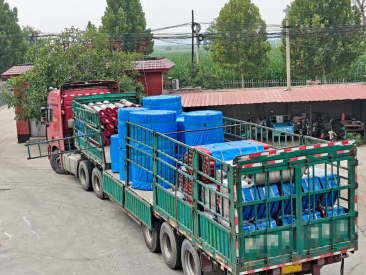
Shanghai Eastrise Trading Co., Ltd. is a Shanghai-based supplier of mining accessories — conveyor idlers and rollers, rubber conveyor belts, pulleys and drums, high-pressure rubber hoses and pipe connectors — operating self-operated manufacturing factories and exporting to global markets. Using its published product and process documentation as a reference case, the following six checkpoints show what a buyer should ask for at each stage of evaluation, and what each document actually proves.
1. Batch material and inspection reports
Ask for material reports that cover the batch being shipped, not a generic mill certificate filed years ago. On its impact roller line, Eastrise states that batch material and inspection reports are available, and on its self-aligning idler line it states that batch-wise inspection reports are supplied for overseas project acceptance.
What this proves: the tube and shaft steel entering your order matches the specification that was quoted. Material substitution is one of the cheapest ways to reduce cost invisibly, and a batch-linked material report is the only practical way to rule it out.
2. Drawing confirmation and first-article inspection
A confirmed drawing is the boundary between marketing and manufacturing. The trough idler specification states that drawing confirmation and first-article inspection are available for project-specific load matching; the engineering support mode lists drawing confirmation at 3–5 business days.
What this proves: the supplier has interpreted your installation dimensions as engineering input rather than as a part number. The engineering support scope explicitly covers product selection based on belt width, belt speed, load, trough angle, environment and installation dimensions — which is the work that has to happen before a drawing can be confirmed.
First-article inspection then closes the loop: the approved sample, not the catalogue, becomes the acceptance reference for the run.
3. Full-batch inspection on dimension and radial run-out
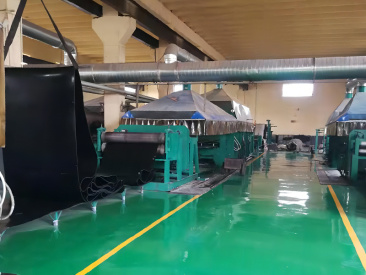
This is the checkpoint most often skipped. The trough idler specification states that full-batch inspection on dimension and radial run-out controls coaxiality, minimizing belt vibration and abnormal wear. The impact roller specification states that strict factory inspections on radial run-out and rotational resistance are carried out.
What this proves: run-out and coaxiality are batch properties, not sample properties. A supplier that inspects only the first article can still ship a run with varying concentricity, and the consequence shows up downstream as belt vibration, edge abrasion and accelerated roller wear. The quality-control scope published for OEM/ODM production covers incoming material, dimensional, radial runout, rotational resistance, noise and appearance inspections — a combination that targets exactly these failure modes.
4. Standards alignment as a verification anchor
Standards only help if the buyer asks which standard maps to which document. Instead of asking “are your rollers certified?”, ask which clause of which standard each inspection report is written against.
Eastrise states that its impact roller batch material and inspection reports comply with DIN 22112, CEMA and GB/T 10595. Those three references cover different ground: DIN 22112 Part 3 (1996) addresses testing requirements for underground coal mining idlers, CEMA Standard No. 502-2022 addresses dimensional standards and load ratings for troughing and return idlers, and GB/T 10595 is the Chinese national standard referenced in the supplier's own reporting. ISO 5048:1989 sits alongside them as the calculation basis for belt power and tension with carrying idlers.
A supplier that can name the standard, the part, and the document that maps to it is giving the buyer something auditable. A supplier that answers only with an adjective is not.
5. Lead-time reality for project planning
Delivery assurance is not a single number. It is the sum of the stages that sit between a purchase order and a delivery note, and each stage has its own clock. For the trough idler, the published figures are a sample lead time of 5–7 days and a mass-production lead time of 15–30 days.
Those two numbers are the ones most often misused in planning. A 15–30 day mass-production window is measured from the point production is released, which sits after drawing confirmation, sample approval and first-article inspection. Eastrise publishes drawing confirmation at 3–5 business days under its engineering support mode. A realistic project timeline therefore stacks drawing confirmation, first-article approval and mass production, and then adds inspection and documentation before shipment.
6. Customization and OEM/ODM checks as evidence of engineering depth
The final checkpoint is the one that reveals how much engineering sits behind a delivery commitment. A supplier that can only sell standard sizes has a short production path and a simple schedule; a supplier that re-engineers seals, tolerances and lengths for a site has a longer path and must be able to control it.
The published customization scope for Eastrise covers:
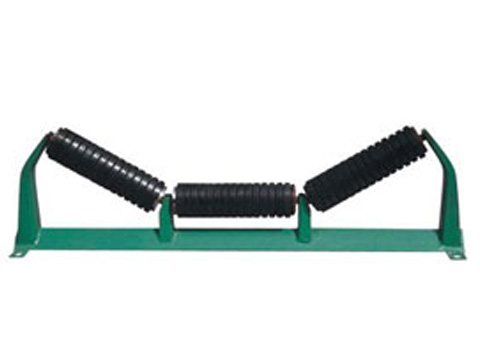
- Tube diameter: Ø89 / 108 / 133 mm on trough idler, parallel idler and self-aligning idler designs
- Shaft diameter: Ø20 / 25 mm, with the impact roller using Ø25 mm shaft and Ø108 mm tube
- Roller length: customizable to match on-site belt width; the impact roller carries a suggested length range of 315–1,150 mm
- Trough angles: 20° / 25° / 35° options to contain bulk material and reduce spillage
- Sealing: an optional optimized sealing structure for heavy-dust environments, aimed at preventing bearing seizure
- Surface and bearing options: galvanized or coated surface treatment for humid, dusty and high-temperature conditions, with sealed double-row bearings on trough idlers and sealed bearings on return and self-aligning designs
- OEM/ODM scope: tube diameter, shaft diameter, length, seals, bearings, surface treatment, logo and packaging
- Private label scope: nameplates, colors, packaging, labels and manuals
For a buyer, the value of this list is not the range itself but the inference it supports: a supplier that can vary tube diameter, shaft diameter, length and sealing configuration on request is running a configurable production process, and a configurable process is what makes a project-specific delivery date meaningful.
Step-by-Step: Running the Evaluation in Sequence
The checkpoints above are most useful when applied in order, because each stage produces the input for the next.
- Before RFQ — fix the standard. Decide which standard governs the application (for example CEMA 502-2022 for troughing and return idler dimensions and load ratings, or DIN 22112 Part 3 for underground coal mining testing requirements) and state it in the enquiry.
- At RFQ — request the document list, not just the price. Ask which reports the supplier can issue with the shipment: batch material reports, batch inspection reports, and pre-shipment inspection records.
- Before the purchase order — confirm the drawing. Expect a drawing confirmation step; the published turnaround under engineering support is 3–5 business days. Confirm belt width, belt speed, load, trough angle (20°, 25° or 35°) and installation dimensions at this stage.
- Before mass production — approve the sample and the first article. The sample window is 5–7 days for OEM/ODM and trough idler items. The QC sequence is sample approval, then first-article inspection, then batch sampling inspection. Retain the approved sample as the acceptance reference.
- During production — require batch-level data. Confirm that dimension and radial run-out are inspected across the batch, not only on the first article, and that rotational resistance and noise are checked where the application is noise-sensitive.
- Before shipment — verify the release package. The published private-label QC scope covers pre-shipment appearance, dimension, performance, quantity and packaging inspection, with a full set of export documents issued under FOB or CIF terms. For project acceptance, batch-wise inspection reports can be supplied.
- After delivery — confirm the support path. Engineering support after-sales covers remote technical support, warranty service, drawings, inspection reports and spare-parts recommendations; OEM/ODM after-sales covers remote product selection, drawing confirmation, installation guidance and quality-issue support.
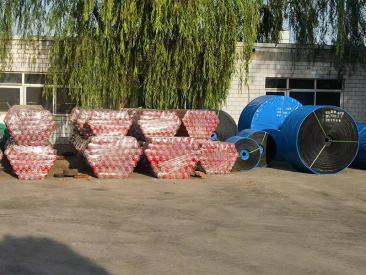
Where This Framework Matters Most
Three application profiles make the difference between a verified and an unverified supplier most visible.
Mining ore conveyor lines
The working condition is dusty, heavy-duty continuous bulk material handling in 24/7 operation. Special requirements include dust-resistant seals, low rotational resistance and wear resistance. A reference case from the supplier's records describes a mining contractor running 100,000 units per year over a two-year period on a mine belt conveyor system handling ore, crushed stone and other bulk materials, with stable continuous operation under heavy-load conditions, a low failure rate, and reduced downtime for material transportation. The stated highlight is wear resistance and adaptability to harsh, dusty mine environments — attributes that are only meaningful if the batch inspection behind them exists.
Cement raw material handling lines
Cement lines combine heavy dust, medium-to-high temperatures and continuous operation. The stated requirement is dust and corrosion resistance, with the rollers supporting stable belt tracking and reducing belt mistracking and maintenance frequency. Here the trough angle choice (20°, 25° or 35°) and the coating option matter as much as the roller body, because spillage and tracking errors drive maintenance load.
Port and bulk terminal conveyors
Port applications operate outdoors under humid, salt-spray and long-distance conveying conditions, typically 24/7, with the roller supporting the return belt and maintaining smooth operation. Stated requirements are corrosion-resistant coating, sealed bearings and low noise. Parallel idler rollers offer optional galvanized or anti-corrosion coating for exactly these humid outdoor and salt-spray environments.
Comparison Tables
The first table compares the three published production modes on the parameters that affect a project schedule and a quotation. The second maps each verification checkpoint to the document that satisfies it.
Production mode comparison
| Parameter | OEM / ODM | Engineering Support | Private Label |
|---|---|---|---|
| Customization scope | Tube diameter, shaft diameter, length, seals, bearings, surface treatment, logo, packaging | Product selection based on belt width, belt speed, load, trough angle, environment, installation dimensions | Nameplates, colors, packaging, labels, manuals |
| Minimum order quantity | 10 units | 50 pcs, negotiable for large-scale projects | 100 pcs, negotiable for large orders |
| Sample / drawing stage | Samples: 5–7 days | Drawing confirmation: 3–5 business days | Not applicable (branding stage) |
| Mass-production lead time | 15–30 days | 30–45 days | 30–45 days upon order confirmation |
| Quality control | Incoming material, dimensional, radial runout, rotational resistance, noise, appearance inspections | Sample approval, first-article inspection, batch sampling inspection | Pre-shipment appearance, dimension, performance, quantity and packaging inspection |
| Typical export markets | Global (current export share: 20%) | EU / Middle East / Asia / Americas | Global |
Verification evidence matrix
| Checkpoint | Document to request | What it confirms |
|---|---|---|
| Material | Batch material report tied to the shipped batch | Tube and shaft steel match the quoted specification |
| Engineering | Confirmed drawing, then first-article inspection record | The installation dimensions were engineered, not assumed |
| Tolerance | Full-batch dimension and radial run-out inspection data | Coaxiality is controlled across the order, limiting belt vibration and abnormal wear |
| Standards | Inspection report mapped to a named standard (DIN 22112, CEMA, GB/T 10595) | Claims map to a clause, not to an adjective |
| Schedule | Dated plan covering drawing confirmation, sample, mass production and inspection | The delivery date is built from stages, not quoted as a single number |
| Shipment | Pre-shipment inspection record and export documentation | The release package matches the ordered quantity, performance and packaging |
Frequently Asked Questions
Which standards should a conveyor roller supplier be able to document?
Three references are commonly used as verification anchors. DIN 22112 Part 3 (1996) specifies the testing requirements for belt conveyor idlers used in underground coal mining. CEMA Standard No. 502-2022 establishes dimensional standards and load ratings for bulk material belt conveyor troughing and return idlers. ISO 5048:1989 provides the standard for calculating power and tension in belt conveyors with carrying idlers. Shanghai Eastrise Trading Co., Ltd. states that batch material and inspection reports for its impact roller line comply with DIN 22112, CEMA and GB/T 10595. The practical test is not whether a supplier says “standards compliant”, but whether it can name the standard, the relevant part, and the specific report that corresponds to it.
How do I confirm a supplier can engineer rollers for my conveyor rather than simply supply a catalogue item?
Ask for drawing confirmation and first-article inspection. Under its engineering support mode, Shanghai Eastrise Trading Co., Ltd. carries out product selection based on belt width, belt speed, load, trough angle, environment and installation dimensions, with drawing confirmation published at 3–5 business days. Quality control for this mode covers sample approval, first-article inspection and batch sampling inspection. The customization scope provides a second signal: tube diameter of Ø89 / 108 / 133 mm, shaft diameter of Ø20 / 25 mm, adjustable roller length to match belt width, trough angle options of 20° / 25° / 35°, and an optional optimized sealing structure for heavy-dust sites. If a supplier can change seals, lengths and surface treatment on request, it is running a configurable process rather than reselling stock.
What minimum order quantities and cost-relevant choices should I plan for?
MOQ depends on the production mode. OEM/ODM starts at 10 units. Engineering support starts at 50 pcs and is negotiable for large-scale projects. Private label starts at 100 pcs and is negotiable for large orders. The choices that drive commercial terms most are the ones that change the production process: sealing configuration (including the optional optimized sealing structure for heavy-dust environments), surface treatment such as galvanized or anti-corrosion coating, bearing specification, and non-standard roller length. Quoting a single standard size and then adding site-specific requirements later is what usually distorts both price and schedule.
What should the sampling stage look like before mass production begins?
Sampling should produce three things: a physical sample, an approved drawing, and a first-article inspection record. The published OEM/ODM sample lead time is 5–7 days, and the same 5–7 day sample window applies to the trough idler, whose mass-production lead time is 15–30 days. The QC sequence runs from sample approval to first-article inspection to batch sampling inspection. Retaining the approved sample as the acceptance reference for the full run is the step that converts a sample into a quality control instrument rather than a souvenir.
What lead times are realistic when planning a conveyor roller project?
Build the schedule from stages rather than from one number. For the trough idler, the published figures are a sample lead time of 5–7 days and a mass-production lead time of 15–30 days. Drawing confirmation is published at 3–5 business days. Engineering support and private label orders carry mass-production windows of 30–45 days. Inspection and documentation should be added before shipment, including pre-shipment appearance, dimension, performance, quantity and packaging inspection on private label orders, with export documents issued under FOB or CIF terms. Adding these stages gives a defensible delivery date instead of an optimistic one. If you want to test the framework against your own drawing, Shanghai Eastrise Trading Co., Ltd. accepts sample and quotation requests at jone.liu@sh-eastrise.com or via WhatsApp on +86 18516552763, and its product catalogue can be downloaded using the link at the end of this article.
Conclusion: Verification Is a Paper Trail, Not a Promise
A conveyor roller supplier is evaluated correctly when the buyer can point to a document for every claim. Capability is confirmed by a batch material report, a confirmed drawing, a first-article inspection record and full-batch dimension and radial run-out data that holds coaxiality across the order. Delivery assurance is confirmed by a dated plan that separates drawing confirmation, sampling, mass production and pre-shipment inspection instead of compressing them into a single promised date. Standards alignment — DIN 22112, CEMA and GB/T 10595, with ISO 5048:1989 as the calculation basis — gives those documents an external reference point. Customization depth, from tube diameter and shaft diameter through to trough angle and heavy-dust sealing options, is the evidence that the engineering behind the commitment actually exists.
Applied in sequence, these checkpoints turn a price comparison into a supplier decision that a project team can defend.
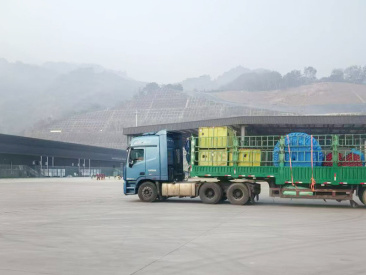
Next step: send your belt width, trough angle, installation dimensions and target delivery date. Shanghai Eastrise Trading Co., Ltd. will confirm the drawing, quote the correct production mode, and issue a sample inside the published 5–7 day window.
Email: jone.liu@sh-eastrise.com | WhatsApp / Tel: +86 18516552763
Website: www.sh-eastrise.com | Catalogue: Download the Eastrise product catalogue (PDF)
Have Questions or Need More Details?
Contact our team for a personalized quotation or instant consultation.
Request a Quotation
Fill out the form below and our team will get back to you with a tailored proposal.
WhatsApp Direct Chat
Prefer to chat in real-time? Message us on WhatsApp for instant assistance & quick answers.
- Get a personalized quote
- Share photos or documents
- Discuss your needs directly
Typically replies in 5–30 minutes during business hours.