
DIN 22112, CEMA, and GB/T 10595: A Compliance Roadmap for Conveyor Rollers
A conveyor roller compliance roadmap is a mapping, not a certificate pile. It connects each standard a project quotes to the specific document that proves the roller meets it, and it connects each buyer decision to the evidence that settles that decision. For most global roller projects the roadmap runs through three standards: DIN 22112 Part 3, which specifies the testing requirements for belt conveyor idlers used in underground coal mining; CEMA Standard No. 502-2022, which establishes dimensional standards and load ratings for bulk material belt conveyor troughing and return idlers; and GB/T 10595, the Chinese reference that appears on batch material and inspection reports when a project specifies it.
The roller itself is only half of the evidence. A rubber-ring impact roller such as the ER-IMPACT-108 carries the mechanical answer to a loading-point problem, with a suggested tube diameter of Ø108 mm and a suggested shaft diameter of Ø25 mm. The batch Material and Inspection Report carries the compliance answer, and it is the document most often missing when a shipment is checked on arrival.
This roadmap is written for buyers who have already decided that compliance matters and now need to prove it — the transition from evaluation into execution. Shanghai Eastrise Trading Co., Ltd. is a Shanghai-headquartered foreign-trade enterprise that supplies conveyor idler rollers and other mining accessories to global markets through self-operated manufacturing facilities, and its documentation practice is used below as a worked example of how the roadmap operates on a live order.
Problem Definition: "Standards-Compliant" Is Not a Specification
A quotation that says "compliant with international standards" tells a buyer very little. Three failures repeat when roller orders move from evaluation into execution.
- Standard quoted, scope unmatched. DIN 22112 Part 3 addresses the testing requirements for belt conveyor idlers used in underground coal mining. A roller destined for a surface quarry line can still be produced and documented well, but the duty assumed by that standard is underground coal — so the buyer has to confirm that the testing context matches the actual installation.
- Dimensions confirmed, performance unproven. CEMA Standard No. 502-2022 covers the dimensional standards and load ratings for troughing and return idlers. A roller can match every drawing dimension and still fail in service on radial runout or rotational resistance if those values are never measured and recorded.
- Performance claimed, documents missing. Statements about wear resistance, rotational drag or service life cannot be audited after the fact. They become auditable only when attached to a batch record that identifies material, dimensions and measured values.
The remedy is procedural rather than technical. A compliance roadmap defines, before the purchase order is issued, which standard governs which decision, and which single document proves each claim.
Definition: What a Conveyor Roller Compliance Roadmap Contains
A conveyor roller compliance roadmap is a four-column mapping — standard, scope, proving document, buyer decision — completed for one specific project. It stays inside the text of the standards it cites. Any requirement that cannot be traced back to a standard clause or to a batch document should be treated as unverified and either removed from the specification or resolved before production starts.
Industry Background: Why One Standard Cannot Cover a Global Roller Project
Rollers and idlers are a substantial component category. The rollers and idlers segment was valued at USD 4.14 billion in 2025 and is projected to reach USD 7.05 billion by 2034 (Straits Research). The broader roller conveyor market was valued at USD 3.15 billion in 2025 (Dataintelo). The two figures are not directly comparable, because published market sizes use different scope definitions — one covering components and the other a sub-system. That difference is a useful reminder that scope discipline matters in market data as much as it does in a standard.
Two structural facts explain where compliance pressure concentrates. Steel remains the dominant material for conveyor rollers, accounting for 64% of global market share in 2024, and Mining & Quarrying is the leading end-use industry for rollers and idlers, representing 36% of total revenue in 2024 (Straits Research). Heavy, abrasive, high-impact duty is therefore the norm in this category rather than the exception — which is exactly why carrying rollers, return rollers and impact rollers are specified so carefully.
The standards themselves come from different traditions. CEMA Standard No. 502-2022 is the North American reference for dimensional standards and load ratings of bulk material belt conveyor troughing and return idlers, and it is widely used wherever frames and replacement parts must interchange. DIN 22112 Part 3 (1996) is the German testing reference for belt conveyor idlers in underground coal mining. GB/T 10595 belongs to the Chinese standards system and appears on documentation when a Chinese project, or a buyer's Chinese specification, calls for it.
One further standard is often pulled into the same conversation and should be kept apart. ISO 5048:1989 provides the international standard for calculating power and tension in belt conveyors with carrying idlers. It is a conveyor design calculation, not a roller acceptance document. Mixing the two is a common source of confusion during technical review.
What Each Standard Actually Covers
DIN 22112 Part 3 (1996): Testing Requirements for Underground Coal Idlers
DIN 22112 Part 3 specifies the testing requirements for belt conveyor idlers used in underground coal mining, with jurisdiction in Germany and Europe. Read as a procurement tool, it answers one question: what testing evidence should accompany an idler that will operate underground in coal? Buyers specifying DIN 22112 are not buying a finish or a brand — they are buying a test record. That is why the practical request is a batch document issued against DIN 22112, with the applicable test clauses confirmed in the contract.
CEMA Standard No. 502-2022: Dimensions and Load Ratings
CEMA Standard No. 502-2022 establishes dimensional standards and load ratings for bulk material belt conveyor troughing and return idlers, with jurisdiction in North America and, in practice, any market where equipment must interchange with CEMA-dimensioned frames. It answers a different question: will this roller fit, and is it rated for the load it will carry? For carrying rollers, return rollers and troughing idlers, CEMA alignment is usually the first filter a maintenance or engineering team applies, because a dimensionally incompatible roller cannot be installed at all.
GB/T 10595: The Chinese Performance Reference
GB/T 10595 is the Chinese standard named on Shanghai Eastrise's batch Material and Inspection Reports when a project specifies it. It answers a documentation question: which national reference the batch record is issued against. The applicable requirements are confirmed per project, and the current edition of the standard — not a summary of it — governs. Buyers sourcing from Chinese suppliers should name GB/T 10595, DIN 22112 or CEMA 502 explicitly on the purchase specification, so that the report arriving at the end of production is issued against the standard the project actually needs.
ISO 5048:1989: Adjacent, Not Interchangeable
ISO 5048:1989 provides the international standard for calculating power and tension in belt conveyors with carrying idlers. It supports conveyor design, which then determines the load a roller must carry. It does not replace DIN 22112, CEMA 502 or GB/T 10595 as an acceptance reference for the roller itself, and it should appear on the design document rather than on the roller certificate.
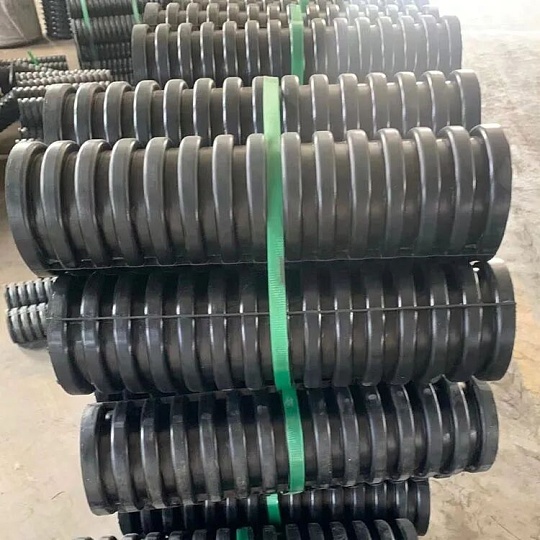
The rubber-ring impact roller ER-IMPACT-108: suggested tube diameter Ø108 mm, suggested shaft diameter Ø25 mm, suggested length range 315–1,150 mm, carbon steel body with wear-resistant rubber rings.
Worked Example: The Impact Roller ER-IMPACT-108
The ER-IMPACT-108 is a rubber-ring impact roller in Shanghai Eastrise's roller range. Its suggested parameters are a tube diameter of Ø108 mm, a shaft diameter of Ø25 mm and a length range of 315–1,150 mm; the rubber ring specification is confirmed per project. The construction combines carbon steel with wear-resistant rubber, and the intended application areas are loading points, crusher discharge zones and heavy-duty conveyors.
This example shows how a roadmap turns a standard into a checklist. A CEMA-oriented buyer checks the dimensional envelope and the load rating. A DIN 22112-oriented buyer checks the testing record. A buyer working to a Chinese specification checks that the batch report names GB/T 10595. All three are evaluating the same rubber-ring impact roller; only the column of the roadmap that matters to them changes.
Step-by-Step: Building the Compliance File for a Roller Order
Seven steps cover the transition from evaluation into execution.
Step 1 — Name the governing standard in the contract. State DIN 22112, CEMA 502, GB/T 10595 or a combination of them, together with the application context (underground coal, surface bulk handling, port terminal). A standard named without a context cannot be verified later.
Step 2 — Request the batch Material and Inspection Report. Shanghai Eastrise issues this document per batch. Its scope covers material, dimensions, radial runout, rotational resistance and appearance, and it can be issued against DIN 22112, CEMA or GB/T 10595 subject to project requirements. The issuing authority is internal QC, with a third party appointed when an order requires it. Because the report is generated by batch rather than by catalogue model, it describes the rollers that were actually produced.
Step 3 — Confirm the quality system behind the batch. ISO 9001:2015 certification covering design, procurement, production and quality management is in place at the manufacturing operation. A batch report is only as reliable as the management system that produces it, so this step establishes the context in which the batch numbers were generated.
Step 4 — Lock drawings or samples before mass production. Under engineering support, drawing confirmation takes 3–5 business days, and the quality sequence runs through sample approval, first-article inspection and batch sampling inspection. Under OEM/ODM production, samples are available in 5–7 days.
Step 5 — Write the acceptance criteria before inspection takes place. Standard pre-shipment inspection covers dimensions, appearance, radial runout, rotational resistance, quantity and packaging. Third-party inspection can be added, but the acceptance criteria must be stated in the contract — an inspection performed without agreed criteria produces an opinion rather than a result.
Step 6 — Settle the commercial terms that affect verification. Confirm MOQ, delivery terms and payment structure at the same time as the technical specification, because those terms determine which production mode and which inspection depth apply to the order.
Step 7 — Archive the file alongside the shipment. Keep the batch report, drawing confirmation, inspection records and shipping documents together. When a roller reaches site months later, the compliance file — not the quotation — is what answers the question.
Use Cases: Where the Roadmap Changes Shape
The three standards do not carry equal weight in every application, and the roadmap should be adjusted accordingly.
- Mining (underground and open pit). Working conditions are dusty, heavy-duty and continuous, often around the clock, on ore conveyor lines where rollers support the belt and absorb loading impact. Dust-resistant seals, low rotational resistance and wear resistance are the recurring requirements, with parameters subject to operating conditions. This is the environment where the testing obligations of DIN 22112 Part 3 become directly relevant.
- Cement production. Heavy dust, medium-to-high temperatures and continuous operation on raw material handling lines. The goal is stable support that reduces belt mistracking and maintenance frequency, with dust and corrosion resistance required.
- Ports and logistics. Outdoor, humid, salt-spray and long-distance conveying on bulk terminal conveyors, including return belt support. Corrosion-resistant coating, sealed bearings and low noise are the priorities, and dimensional interchange with existing frames usually makes CEMA-informed specifications the practical starting point.
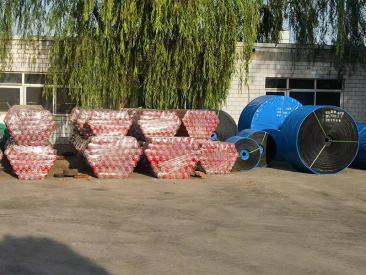
Batch-level inspection at the manufacturing facility: material, dimensions, radial runout, rotational resistance and appearance are recorded before shipment.
Case Reference: Mining Contractor, Continuous Ore Conveying
A mining contractor operates a mine belt conveyor system for the continuous transport of ore, crushed stone and other bulk materials, using 100,000 units per year over a two-year period. The reported outcome is stable continuous operation under heavy-load mine conditions, with a low failure rate and reduced downtime for material transportation. The recorded highlights are wear resistance and adaptability to a harsh, dusty mine environment. Under the roadmap described here, that outcome is supported by two things: a roller configuration matched to the loading point, and a batch documentation trail that shows what was delivered.
Side-by-Side: Standards, Scope and Proving Documents
| Standard | Jurisdiction / typical market | What it covers | Document that proves it |
|---|---|---|---|
| DIN 22112 Part 3 (1996) | Germany / Europe | Testing requirements for belt conveyor idlers used in underground coal mining | Batch Material and Inspection Report issued against DIN 22112, subject to project requirements |
| CEMA Standard No. 502-2022 | North America / global interchange | Dimensional standards and load ratings for bulk material belt conveyor troughing and return idlers | Dimensional records within the batch Material and Inspection Report, checked against the frame drawing |
| GB/T 10595 | China / projects specifying a Chinese standard | Chinese standard named on roller documentation; applicable requirements confirmed per project | Batch Material and Inspection Report issued against GB/T 10595 when the project names it |
| ISO 5048:1989 | International | Calculation of power and tension in belt conveyors with carrying idlers | Conveyor design calculation — not a roller acceptance document |
Standards shown as recorded for conveyor roller documentation; the applicable clauses and edition are confirmed per project.
Procurement Data Buyers Will Need to Confirm
| Production mode | Customization scope | MOQ | Lead time | Monthly capacity |
|---|---|---|---|---|
| OEM / ODM | Tube diameter, shaft diameter, length, seals, bearings, surface treatment, logo and packaging | 10 units | Samples 5–7 days; mass production 15–30 days | 100 units |
| Engineering support | Product selection based on belt width, belt speed, load, trough angle, environment and installation dimensions | 50 pcs, negotiable for large-scale projects | Drawing confirmation 3–5 business days; mass production 30–45 days | 100 pcs |
| Private label | Nameplates, colours, packaging, labels and manuals | 100 pcs, negotiable for large orders | 30–45 days upon order confirmation | 10,000 pcs |
Recorded purchasing terms for roller orders include delivery on FOB, CIF or EXW terms, with full container load and less-than-container load supported and export documents provided. Payment is by T/T, with roller orders quoted at 30% deposit and 70% before shipment. Acceptance criteria are stated in the contract, and third-party inspection is optional. Production is made to order, and goods are exported to global markets, including the EU, Middle East, Asia and the Americas.
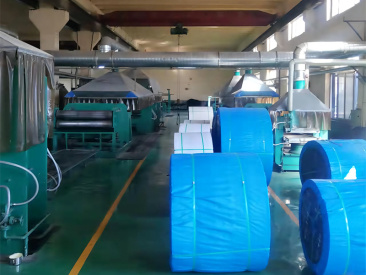
Conveyor roller production runs to order, with annual production capacity of 2,000 t and engineering support from a team of 10 engineers.
Frequently Asked Questions
Which standard should I specify for conveyor rollers — DIN 22112, CEMA, or GB/T 10595?
Match the standard to the decision rather than to the brand. DIN 22112 Part 3 specifies the testing requirements for belt conveyor idlers used in underground coal mining and is the German/European reference. CEMA Standard No. 502-2022 establishes dimensional standards and load ratings for bulk material belt conveyor troughing and return idlers and is the North American reference used wherever interchangeability matters. GB/T 10595 is the Chinese standard named on batch Material and Inspection Reports when a project specifies it. Many projects name more than one standard. ISO 5048:1989 is a separate power-and-tension calculation standard and does not replace any of the three as a roller acceptance reference.
How do I verify that an OEM belt conveyor roller manufacturer can actually meet the standard?
Ask for the document rather than the description. The verifiable request is a batch Material and Inspection Report covering material, dimensions, radial runout, rotational resistance and appearance, issued per batch against the named standard, plus confirmation of an ISO 9001:2015 quality management system covering design, procurement, production and quality management. The manufacturing scope behind that documentation includes OEM and ODM production services, with customization across tube diameter, shaft diameter, length, seals, bearings, surface treatment, logo and packaging, and engineering support covering product selection based on belt width, belt speed, load, trough angle, environment and installation dimensions.
What drives the budget on a compliant conveyor roller order?
Three variables move the number most: the production mode and its MOQ threshold, the depth of customization, and the depth of inspection. Recorded MOQ levels are 10 units for OEM/ODM production, 50 pcs for engineering support — negotiable for large-scale projects — and 100 pcs for private label production, negotiable for large orders. Verification depth also affects cost, because sample approval, first-article inspection and batch sampling inspection all consume production time. Payment for roller orders is recorded at 30% deposit and 70% before shipment, with FOB, CIF and EXW delivery terms available.
Can I validate a roller with a sample before committing to production?
Yes. Under OEM/ODM production, samples are produced in 5–7 days, and sample orders can start from 2 units subject to model confirmation, with courier, air freight or sea freight supported. Acceptance for sample orders is based on a customer-approved sample or drawing confirmation, with inspection records available. For engineering support projects, sample approval and first-article inspection form part of the standard quality sequence before batch production begins.
What lead times should I plan for, and what is the next step?
Drawing confirmation takes 3–5 business days under engineering support. Mass production lead time is 15–30 days for OEM/ODM production and 30–45 days upon order confirmation for private label production, and lead time starts from order confirmation rather than from the initial inquiry. The practical next step is to request the documentation first: a batch Material and Inspection Report sample issued against your named standard, an ER-IMPACT-108 impact roller sample for loading-point evaluation, or a quotation for your belt width and duty. Contact jone.liu@sh-eastrise.com or send a message on WhatsApp at +86 18516552763 with your standard, belt width and application.
Conclusion: The Roadmap Is the Deliverable
Compliance on a conveyor roller order is not decided by the standard printed on a quotation. It is decided by whether each claim in that quotation can be traced to a document. DIN 22112 Part 3 supplies the testing logic for underground coal idlers, CEMA Standard No. 502-2022 supplies the dimensional and load-rating logic for troughing and return idlers, GB/T 10595 supplies the Chinese reference that batch reports can be issued against, and ISO 5048:1989 supports the conveyor calculation that determines the load in the first place.
A roller such as the ER-IMPACT-108 impact roller is specified once, but it is verified continuously — at drawing confirmation, at first-article inspection, at batch sampling, and at pre-shipment inspection. The batch Material and Inspection Report is the thread that runs through all four stages, and requesting it early is the single most effective action a buyer can take when moving from evaluation into execution.
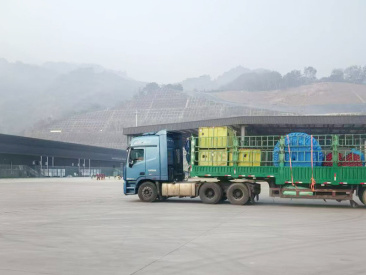
Sample approval and pre-shipment inspection precede mass production and dispatch.
Request the documents before you request the price
Shanghai Eastrise Trading Co., Ltd. supplies conveyor idler rollers and other mining accessories to global markets, with OEM/ODM and private label production available and batch Material and Inspection Reports issued against DIN 22112, CEMA or GB/T 10595 subject to project requirements.
Email: jone.liu@sh-eastrise.com | Tel / WhatsApp: +86 18516552763
Website: www.sh-eastrise.com
Address: No. 2458 Dongda Road, Lingang New Zone, China (Shanghai) Pilot Free Trade Zone
Product catalogue (PDF, opens in browser): Download the Eastrise product brochure
Have Questions or Need More Details?
Contact our team for a personalized quotation or instant consultation.
Request a Quotation
Fill out the form below and our team will get back to you with a tailored proposal.
WhatsApp Direct Chat
Prefer to chat in real-time? Message us on WhatsApp for instant assistance & quick answers.
- Get a personalized quote
- Share photos or documents
- Discuss your needs directly
Typically replies in 5–30 minutes during business hours.