
Top Conveyor Roller Picks for Loading Points and Heavy-Duty Conveying: 2026 Recommendation List
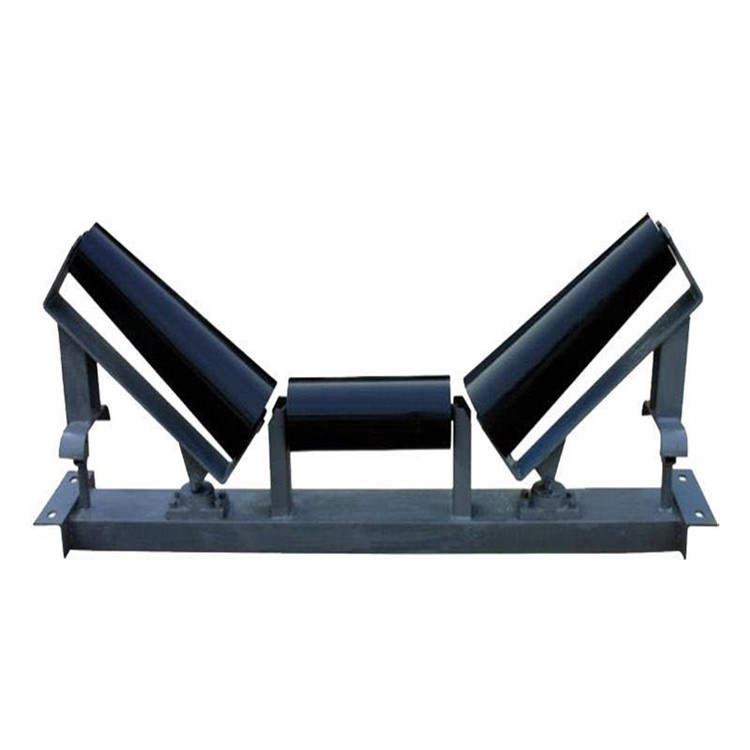
A self-aligning (training) idler roller from the heavy-duty conveyor roller range ranked in this 2026 recommendation list. Image: Shanghai Eastrise Trading Co., Ltd.
Loading points, crusher discharge chutes and transfer towers are the hardest-working positions on any belt conveyor. Coarse, heavy material drops onto the belt from height, dust works into every bearing cavity, and the line is expected to keep running 24/7. Roller selection in those zones is a zone-by-zone fit question, not a single “which roller is cheapest” decision.
The ranked picks, in short:
- Rubber-ring impact roller (suggested model designation ER-IMPACT-108) — the first pick for loading points, crusher discharge zones and heavy-duty conveyors, because carbon steel and wear-resistant rubber rings absorb heavy material impact and protect the conveyor belt from tearing damage.
- 35° trough carrying idler (ER-TROUGH-108) — the carrying-run roller that contains bulk material and prevents spillage, available in 20°/25°/35° trough angles.
- Parallel idler roller (ER-PARALLEL-108) — the return and flat-carrying roller, with sealed bearings that keep rotational resistance and running noise low.
- Self-aligning (training) idler (ER-ALIGNING-108) — the belt-tracking roller for long-distance lines prone to mistracking.
Each entry below explains why it earns its position, what it is built from, and which documentation accompanies it.
All four picks are drawn from the conveyor idler roller range documented by Shanghai Eastrise Trading Co., Ltd., a Shanghai-based foreign-trade enterprise with self-operated manufacturing factories that supplies mining accessories and conveyor components — conveyor idler rollers, rubber conveyor belts, pulleys and drums, high-pressure rubber hoses and pipe connectors — to global markets. This is an application-fit ranking for heavy-duty conveying, built on each roller type's documented duty, materials, dimensional options, inspection scope and standard coverage. It is not a laboratory comparison of every roller on the market, and where a specification is still to be confirmed for a project, that is stated rather than assumed.
Problem Definition: Why Rollers Fail on Loading Points and Heavy-Duty Lines
Heavy-duty conveyor problems are not evenly distributed along the belt. They concentrate in four places, and each one points to a different roller type.
- Impact damage at the loading point. Falling material concentrates energy on a short section of belt and on the rollers directly beneath the chute. The documented purpose of a rubber-ring impact roller is to absorb heavy material impact at loading points and protect the conveyor belt from tearing damage — energy that a plain steel shell would transfer straight into the belt cover and carcass.
- Dust ingress and bearing seizure. Mining conveyor lines are documented as dusty, heavy-duty and continuous, with special requirements covering dust-resistant seals, low rotational resistance and wear resistance. In heavy-dust environments, an optimized sealing structure is the difference between a roller that keeps turning and a bearing that seizes.
- Belt mistracking on long runs. Belt drift abrades the belt edge and can lead to tearing, especially on long-distance lines. A self-pivoting training idler corrects mistracking automatically and reduces manual on-site adjustment work.
- Maintenance frequency and unplanned downtime. Cement raw-material handling lines are specified for stable support with reduced belt mistracking and maintenance frequency; impact roller factory inspections on radial run-out and rotational resistance exist specifically to reduce unplanned downtime.
Stated as a decision rule: a roller that is selected on purchase price alone, without matching the conveying zone (impact, carrying, return, tracking), the environment (dust, humidity, salt spray) and the duty cycle (24/7 operation), moves cost from procurement into maintenance and belt replacement.
Industry Background: What the 2026 Roller and Idler Market Tells Buyers
Demand for conveyor rollers and idlers is concentrated in bulk material handling, and the published market data for 2026 reflects that. The roller conveyor market was valued at USD 3.15 billion in 2025 (Dataintelo, Roller Conveyor Market Research Report 2034), while the narrower rollers-and-idlers segment was estimated at USD 4.14 billion in 2025 and projected to reach USD 7.05 billion by 2034 (Straits Research, 2026).
Market numbers in this category should be read carefully, because definitions differ. Cognitive Market Research placed the conveyor roller market at USD 115.9 million in 2024, while Straits Research placed rollers and idlers at USD 3.9 billion in 2024. That gap is a scope difference between a component-level definition and a sub-system definition, not a measurement error — so compare like-for-like figures when benchmarking a supplier or a segment.
Two structural facts matter for roller selection. Steel accounted for 64% of global conveyor roller material share in 2024, with the balance distributed across other shell materials. Mining and quarrying was the leading end-use industry for rollers and idlers in 2024, representing 36% of total revenue (both Straits Research). In other words, the roller specification that wins in mining-type conditions — heavy load, dust, continuous duty — is the specification that sets the standard for the wider bulk handling market.
The standards landscape is equally relevant to procurement. ISO 5048:1989 provides the international standard for calculating power and tension in belt conveyors with carrying idlers. CEMA Standard No. 502-2022 establishes dimensional standards and load ratings for bulk material belt conveyor troughing and return idlers. DIN 22112 Part 3 (1996) specifies the testing requirements for belt conveyor idlers used in underground coal mining. GB/T 10595 is the Chinese standard referenced in Eastrise's impact roller documentation, alongside DIN 22112 and CEMA.
Replacement-part sourcing is a global business: Viet Nam's exports under HS 843139 (parts for conveyors and elevators) reached USD 8.59 million in 2023 (UN Comtrade). For buyers, the practical implication is that roller quality and documentation travel further than brand recognition — the supplier who can produce drawings, batch material records and inspection reports is the supplier who can support a project acceptance process.
How This Ranking Was Built: Six Selection Criteria
The ranking order below follows the sequence of risk on a heavy-duty conveyor, and every pick is scored against the same six criteria. A roller that scores well across them for your zone earns a place; a roller that only scores on price does not.
- Zone fit. Impact zone, carrying run, return run or tracking-critical section. A return roller cannot absorb loading impact, and an impact roller is an expensive way to support a return belt.
- Material construction. Carbon steel tube and shaft with sealed bearings as the range baseline; wear-resistant rubber rings on the impact roller; galvanized or coated surface options for corrosive environments.
- Environment and sealing. Heavy dust calls for an optimized sealing structure; outdoor, humid and salt-spray conditions call for corrosion-resistant coating, sealed bearings and low noise.
- Duty cycle. All four picks are documented for use in continuous, 24/7 heavy-duty bulk material handling.
- Documentation. Batch material and inspection reports, full-batch inspection on dimension and radial run-out, drawing confirmation and first-article inspection.
- Project and commercial fit. Customization of tube diameter, shaft diameter, length, seals, bearings, surface treatment, logo and packaging, plus MOQ, sample and production lead times.
Pick 1 — Rubber-Ring Impact Roller (ER-IMPACT-108): Best Fit for Loading Points and Crusher Discharge
Why it earns the No. 1 position: on a loading-point ranking, the roller that prevents belt damage has to come first. The rubber-ring impact roller is constructed of carbon steel and wear-resistant rubber rings; the rubber absorbs heavy material impact at loading points and protects the conveyor belt from tearing damage. Every other pick in this list supports the belt — this one protects its most vulnerable section, at the point where material lands.
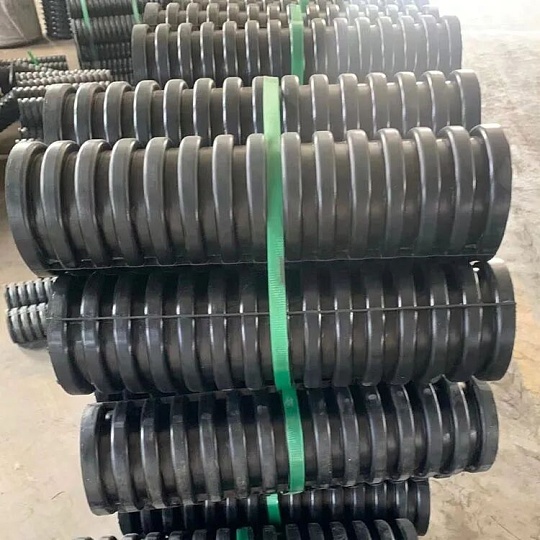
Rubber-ring impact roller (suggested designation ER-IMPACT-108) for loading points, crusher discharge and heavy-duty conveyors. Image: Shanghai Eastrise Trading Co., Ltd.
Specification snapshot (suggested values, confirmed against project drawings)
- Type: rubber-ring impact roller
- Suggested tube diameter: Ø108 mm
- Suggested shaft diameter: Ø25 mm
- Suggested length range: 315–1,150 mm
- Rubber ring specification: to be confirmed by drawing
- Material: carbon steel and wear-resistant rubber
- Customization: OEM and ODM, including tube diameter, shaft diameter and roller length
- Documentation: batch material and inspection reports available, complying with DIN 22112 / CEMA / GB/T 10595
- Duty: designed for 24/7 continuous heavy-load operation
Engineering notes that justify the placement
- An optional optimized sealing structure is available for heavy-dust environments and is intended to prevent bearing seizure — the failure mode that takes a loading-point roller offline first.
- Strict factory inspections are carried out on radial run-out and rotational resistance to keep operation smooth and reduce unplanned downtime.
- Load capacity is designed for the operating conditions rather than published as a single figure, because impact duty depends on drop height, lump size and throughput.
- The product is documented for crusher discharge zones and heavy-duty conveyors, not only for standard transfer points.
- There is a documented field reference: a mining contractor transporting ore, crushed stone and other bulk materials across a mine belt conveyor system used 100,000 roller units per year over a two-year programme, with stable continuous operation under heavy-load mine conditions, a low failure rate and reduced downtime reported.
Where it stops being the right answer: impact rollers are specified for impact zones. Length, rubber ring specification and load capacity must be confirmed against chute geometry, belt width, belt speed, lump size and drop height, and an impact roller does not replace good chute design or an adequately impact-resistant belt cover. For long flat carrying runs, a trough idler set is the more efficient choice.
Pick 2 — 35° Trough Carrying Idler (ER-TROUGH-108) for the Carrying Run
Why it earns a place: once the load has landed, it has to be carried. The 35° trough carrying idler is the workhorse of the carrying run: multiple trough angle options (20°/25°/35°) contain bulk material and prevent spillage, improving conveying efficiency, while a carbon steel tube with sealed double-row bearings delivers the high load-bearing capacity that continuous bulk handling demands. Roller length can be customized to the belt width of the project.
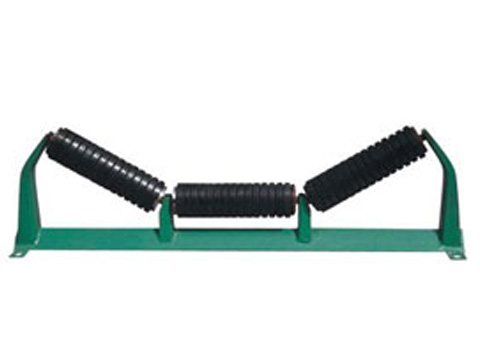
35° trough carrying idler (suggested designation ER-TROUGH-108) in the carrying run of a bulk material conveyor. Image: Shanghai Eastrise Trading Co., Ltd.
Specification snapshot
- Type: 35° trough carrying idler (trough angle options 20°/25°/35°)
- Suggested tube diameter: Ø89/108/133 mm
- Suggested shaft diameter: Ø20/25 mm
- Material: carbon steel tube and shaft with sealed double-row bearings
- Surface options: galvanized or coated treatment for dusty and high-temperature site conditions
- Quality control: full-batch inspection on dimension and radial run-out to control coaxiality, minimizing belt vibration and abnormal wear; drawing confirmation and first-article inspection available for project-specific load matching
- Lead time: sample 5–7 days; mass production 15–30 days
- Applications: mining, cement and bulk port conveyor lines
Where it stops being the right answer: trough angle is not a free choice. It has to match the material's characteristics and the belt width. A trough set also does not absorb loading impact, which is why it sits behind the impact roller in this ranking rather than in front of it.
Pick 3 — Parallel Idler Roller (ER-PARALLEL-108) for Return and Flat-Carrying Duty
Why it earns a place: the return run is the least visible position on a conveyor and often the most numerous one. The parallel idler roller is a versatile flat-roller design used for both flat-section carrying and return-belt supporting applications. High-performance sealed bearings lower rotational resistance and running noise for extended service life, and complete incoming and pre-shipment inspections are intended to avoid roller seizure and cut routine maintenance and replacement frequency.
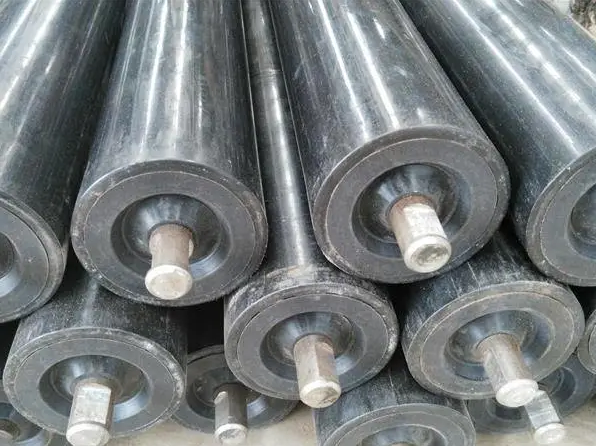
Parallel idler rollers (suggested designation ER-PARALLEL-108) for return-belt support and flat-carrying duty. Image: Shanghai Eastrise Trading Co., Ltd.
Specification snapshot
- Type: return / flat-carrying idler
- Suggested tube diameter: Ø89/108/133 mm
- Suggested shaft diameter: Ø20/25 mm
- Material: carbon steel tube and shaft with sealed bearings; optional galvanized or coated surface
- Environment fit: optional galvanized or anti-corrosion coating for humid outdoor and salt-spray port environments
- Commercial options: private-label service for nameplates and packaging; full set of export documents under FOB / CIF terms
- Applications: mining, cement, ports, logistics and general bulk material handling
Where it stops being the right answer: the parallel roller is a supporting roller. It is not designed to absorb heavy impact at a transfer point, and it is not a substitute for a self-aligning idler on a line that drifts.
Pick 4 — Self-Aligning (Training) Idler (ER-ALIGNING-108) for Belt Tracking
Why it earns a place: tracking is the reliability layer that keeps the other three picks working. The self-pivoting frame of the aligning idler automatically corrects conveyor belt mistracking and reduces the risks of belt edge abrasion and tearing. The integrated assembly of carbon steel roller, pivoting bracket and sealed bearings adapts to 24/7 continuous-operation long-distance conveyor lines, and tight control over radial run-out and coaxiality during manufacturing delivers reliable belt-training performance while reducing manual on-site adjustment work.
Self-aligning (training) idler (suggested designation ER-ALIGNING-108) for belt tracking on long-distance conveyor lines. Image: Shanghai Eastrise Trading Co., Ltd.
Specification snapshot
- Type: self-aligning / training idler
- Suggested tube diameter: Ø89/108/133 mm
- Suggested shaft diameter: Ø20/25 mm
- Pivot frame specification: to be confirmed
- Material: carbon steel tube, shaft and pivot frame with sealed bearings
- Customization: tube diameter and roller length tailored to on-site belt width for mining, cement and port projects
- Support: professional engineering support including application-based product selection and drawing confirmation; batch-wise inspection reports supplied for overseas project acceptance
Where it stops being the right answer: the pivot frame specification is project-dependent and must be confirmed before ordering. A training idler corrects belt drift; it does not correct structural misalignment of the conveyor frame or replace correct belt tensioning practice.
Step-by-Step: Specifying a Roller Set for a Heavy-Duty Conveyor Project
The four picks only work as a set. This is the sequence Eastrise's engineering-support process follows when matching rollers to a project.
- Split the conveyor into zones. Loading point and crusher discharge, carrying run, return run, and tracking-critical sections of long-distance lines. Assign one roller type to each zone before comparing prices.
- Record the operating conditions. Dust concentration, humidity or salt spray, temperature, hours of operation (including whether the line runs 24/7), and the material's lump size and abrasiveness.
- Fix the dimensional envelope. Belt width, tube diameter (Ø89/108/133 mm available), shaft diameter (Ø20/25 mm available), roller length, trough angle (20°/25°/35°) and installation dimensions.
- Match material and surface treatment. Carbon steel tube and shaft with sealed bearings as the baseline; wear-resistant rubber rings where impact occurs; galvanized or coated surfaces for dusty, high-temperature, humid or salt-spray conditions.
- Specify sealing and documentation. Optimized sealing for heavy-dust environments; batch material and inspection reports for the impact roller, and full-batch, incoming and pre-shipment inspections for the other picks.
- Run the engineering review and sampling. Application-based product selection based on belt width, belt speed, load, trough angle, environment and installation dimensions, followed by drawing confirmation (3–5 business days), then samples (5–7 days), sample approval and first-article inspection.
- Confirm production terms. OEM/ODM mass production runs 15–30 days; private-label orders run 30–45 days upon order confirmation at a monthly capacity of 10,000 pcs; engineering-support projects run 30–45 days.
Quality-control scope to write into the purchase specification: incoming material inspection, dimensional inspection, radial runout, rotational resistance, noise and appearance inspections, plus pre-shipment inspection of appearance, dimension, performance, quantity and packaging.
Use Cases: Where These Four Picks Fit
Mining: ore conveyor lines and crusher discharge
Mining conveyors operate in dusty, heavy-duty, continuous bulk material handling conditions. The roller set's role is to support the conveyor belt and absorb loading impact, working with supporting equipment such as the belt, pulleys and conveyor frame under 24/7 operation. Special requirements are dust-resistant seals, low rotational resistance and wear resistance. In practice that means the impact roller under the chute, trough carrying idlers through the carrying run, parallel idlers on the return, and self-aligning idlers where long lines are prone to mistracking.
Cement: raw material handling lines
Cement plants run heavy dust, medium-to-high temperatures and continuous operation on raw material handling lines, with a belt conveyor and belt cleaner as matched equipment. The roller requirement is stable support with reduced belt mistracking and maintenance frequency, plus dust and corrosion resistance. Operating temperature range is to be confirmed per project.
Ports and logistics: bulk terminal conveyors
Bulk terminals operate outdoors under humid, salt-spray and long-distance conveying conditions. Here the roller set supports the return belt and maintains smooth operation, with corrosion-resistant coating, sealed bearings and low noise as the stated special requirements; protection level is to be confirmed. This is the environment where the galvanized or coated parallel idler option and sealed bearings matter most, and where the roller set runs 24/7 with conveyor frame, belt and pulleys as matched equipment.
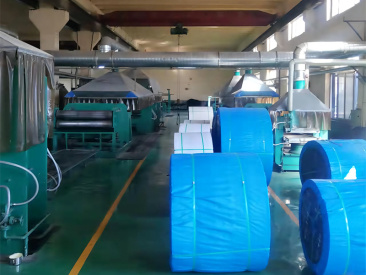
Roller manufacturing and inspection: incoming material, dimensional, radial runout, rotational resistance, noise and appearance checks form the documented quality-control scope. Image: Shanghai Eastrise Trading Co., Ltd.
Comparison Table: The Four Heavy-Duty Conveyor Roller Picks at a Glance
| Rank | Roller pick (suggested model) | Primary duty | Suggested dimensions | Material | Documentation |
|---|---|---|---|---|---|
| 1 | Rubber-ring impact roller (ER-IMPACT-108) | Absorb heavy material impact and protect the belt at loading points, crusher discharge and heavy-duty conveyors | Tube Ø108 mm; shaft Ø25 mm; length 315–1,150 mm | Carbon steel and wear-resistant rubber | Batch material and inspection reports; complies with DIN 22112 / CEMA / GB/T 10595 |
| 2 | 35° trough carrying idler (ER-TROUGH-108) | Carry and contain bulk material in the carrying run; prevent spillage | Tube Ø89/108/133 mm; shaft Ø20/25 mm; trough angle 20°/25°/35° | Carbon steel tube and shaft with sealed double-row bearings | Full-batch inspection on dimension and radial run-out; drawing confirmation and first-article inspection |
| 3 | Parallel idler roller (ER-PARALLEL-108) | Support the return belt and flat-carrying sections; low noise and low rotational resistance | Tube Ø89/108/133 mm; shaft Ø20/25 mm | Carbon steel with sealed bearings; optional galvanized or coated surface | Incoming and pre-shipment inspections; private-label nameplates and packaging; FOB / CIF export documents |
| 4 | Self-aligning (training) idler (ER-ALIGNING-108) | Correct belt mistracking on long-distance lines and reduce manual adjustment work | Tube Ø89/108/133 mm; shaft Ø20/25 mm; pivot frame to be confirmed | Carbon steel tube, shaft and pivot frame with sealed bearings | Batch-wise inspection reports for overseas project acceptance; engineering support and drawing confirmation |
Suggested dimensions are the values documented for each product and must be confirmed against project drawings before ordering. Items marked as to be confirmed are project-dependent.
FAQ: Heavy-Duty Conveyor Rollers for Loading Points and Mining Projects
Which standards and documents should accompany heavy-duty conveyor rollers?
For the rubber-ring impact roller, batch material and inspection reports are available and the product complies with DIN 22112, CEMA and GB/T 10595 standards. These sit inside a wider standard framework: ISO 5048:1989 covers the calculation of power and tension in belt conveyors with carrying idlers; CEMA Standard No. 502-2022 establishes dimensional standards and load ratings for bulk material belt conveyor troughing and return idlers; and DIN 22112 Part 3 (1996) specifies testing requirements for belt conveyor idlers used in underground coal mining. For the trough idler, parallel idler and self-aligning idler, the documented inspection scope covers full-batch dimension and radial run-out checks, incoming and pre-shipment inspections, and batch-wise inspection reports for overseas project acceptance.
How should a mining project choose a heavy-duty conveyor roller manufacturer?
Evaluate the manufacturer against the zone being served, not against a general reputation. The checkable points are: whether the supplier documents zone-specific products (impact, carrying, return, tracking); whether material construction is stated as carbon steel tube and shaft with sealed bearings, with wear-resistant rubber rings where impact occurs; whether sealing options exist for heavy dust; whether inspection scope is documented (incoming material, dimensional, radial runout, rotational resistance, noise, appearance, plus pre-shipment appearance, dimension, performance, quantity and packaging); whether standard coverage can be evidenced; and whether the supplier can run an engineering selection based on belt width, belt speed, load, trough angle, environment and installation dimensions. Shanghai Eastrise Trading Co., Ltd., headquartered in Shanghai, supplies conveyor idler rollers and mining accessories from self-operated factories, supports OEM and ODM customization, and provides remote technical support, drawing confirmation and warranty coverage — a useful checklist to apply to any supplier, including this one.
What are the MOQs for these rollers, and what drives the cost?
Documented minimum order quantities are 10 units for OEM/ODM orders, 50 pcs for engineering-support projects (negotiable for large-scale projects), and 100 pcs for private-label orders (negotiable for large orders). Cost is driven by the tube diameter and length, shaft diameter, the wear-resistant rubber rings on impact rollers, the sealing structure selected for dusty environments, bearing type, surface treatment such as galvanizing or coating, private-label nameplates and packaging, and the scope of inspection and documentation required. Because these variables change per project, no fixed list price applies; quotation follows drawing confirmation.
How do we validate a roller sample before placing a production order?
Samples for OEM/ODM rollers are produced in 5–7 days, and the trough idler follows the same sample lead time of 5–7 days. Drawing confirmation takes 3–5 business days and precedes sampling, so the sample matches the intended installation dimensions. Sample approval and first-article inspection are available, followed by batch sampling inspection during production, and batch material and inspection reports can be supplied for project acceptance.
What lead time and capacity should a heavy-duty mining conveyor project plan for?
Samples are typically ready in 5–7 days. Mass production runs 15–30 days for OEM/ODM rollers and trough idlers, and 30–45 days upon order confirmation for private-label orders at a monthly capacity of 10,000 pcs, as well as for engineering-support projects. The factory covers 11,000 m² with 50 employees, 10 engineers and an annual production capacity of 2,000 t. As a reference point, a mining contractor programme using impact rollers in a mine belt conveyor system for ore and crushed stone ran 100,000 units per year over two years. To move forward, send your belt width, required tube diameter and trough angle, dust and humidity conditions, and the documentation your project acceptance requires, and the team will return a roller selection, sample arrangement and quotation — contact jone.liu@sh-eastrise.com or WhatsApp +86 18516552763.
Conclusion: Match the Roller to the Zone, Not to the Price Tag
The 2026 recommendation for loading points and heavy-duty conveying is a set, not a single part. Rubber-ring impact rollers take the impact at loading points and crusher discharge, protecting the belt from tearing. 35° trough carrying idlers contain and carry the load along the line. Parallel idler rollers support the return belt with low rotational resistance and low noise, with galvanized or coated options for humid and salt-spray sites. Self-aligning idlers hold the belt on track on long-distance lines and reduce manual adjustment work. All four are documented for 24/7 heavy-duty operation, built from carbon steel with sealed bearings, and supported by recorded inspection and, for the impact roller, batch material reports under DIN 22112 / CEMA / GB/T 10595.
The practical next step is a drawing-based selection: provide belt width, belt speed, load, trough angle, environment and installation dimensions, and confirm the tube diameter, shaft diameter, sealing structure and documentation scope before any order is placed.
Request a roller selection, sample or quotation
Send your conveyor project data — belt width, tube diameter, trough angle, dust and humidity conditions — and Shanghai Eastrise Trading Co., Ltd. will return a roller recommendation, sample lead time and quotation. OEM and ODM customization, private-label nameplates and packaging, and complete export documents under FOB or CIF terms are available.
Email: jone.liu@sh-eastrise.com · Tel / WhatsApp: +86 18516552763 · Website: www.sh-eastrise.com
Download the product brochure: Eastrise product catalogue (PDF)
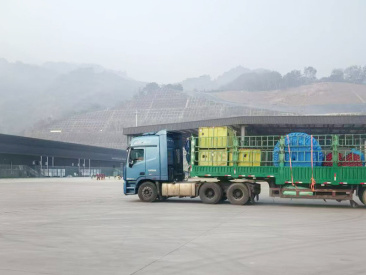
Production and export preparation for conveyor idler roller orders. Image: Shanghai Eastrise Trading Co., Ltd.
Have Questions or Need More Details?
Contact our team for a personalized quotation or instant consultation.
Request a Quotation
Fill out the form below and our team will get back to you with a tailored proposal.
WhatsApp Direct Chat
Prefer to chat in real-time? Message us on WhatsApp for instant assistance & quick answers.
- Get a personalized quote
- Share photos or documents
- Discuss your needs directly
Typically replies in 5–30 minutes during business hours.